%20(1).png)
.png)
Five Kingdoms. One High Throne.
" The throne does not make the man. It only reveals him. "
— Roderin the IV
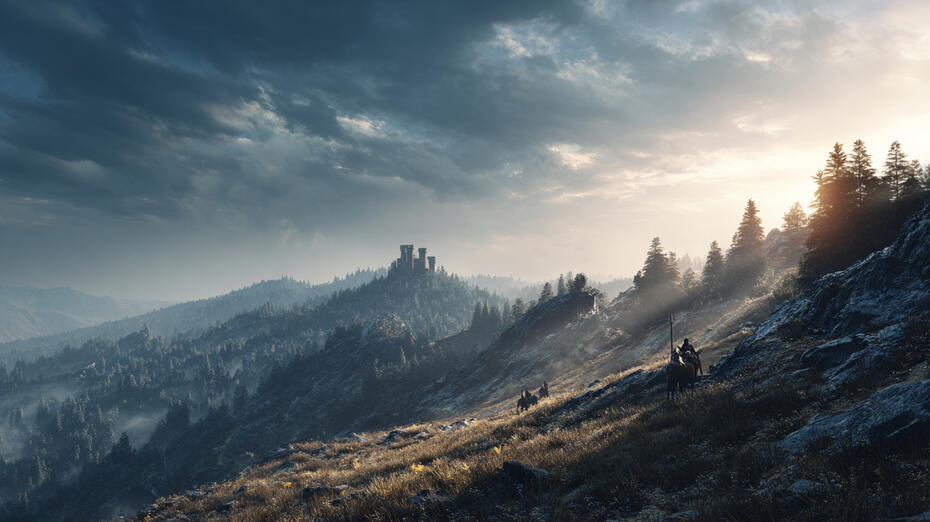
Five Great Kingdoms: Averon is a high-fantasy political epic set on the continent of Averon, a land shaped by ancient crowns, fractured oaths, and the long shadow of a fallen Old Kingdom. It is the primary narrative framework of the Averon setting and serves as the central installment of its wider mythos.The saga chronicles the rise and fall of monarchs, the shifting balance between law and blood, and the enduring consequences of the Sundering of Crowns, an event that shattered imperial unity and gave birth to five sovereign realms. The narrative places equal weight on courtly intrigue, dynastic conflict, and grounded human cost, with particular emphasis on legitimacy, succession, and the burden of rule in a world where history is weaponized as often as steel.Though bound by shared ancestry and trade, the kingdoms are divided by precedent, memory, and ambition, with no true High King having ruled all of Averon for over a thousand years.
A thousand years after the fall of the last true High King, Averon has learned to survive without unity—but not without consequence. The Five Great Kingdoms endure through law, precedent, and guarded alliances, each ruled by crowns that remember the Old Kingdom only as a piece of history. In a land where crowns are remembered as much for the blood they spilled as the order they imposed, the return of a High King may either bind the realm at last—or shatter it beyond repair.
The series is set on the continent of Averon, a land once ruled as a single empire under the Old Kingdom, before its collapse in the Sundering of Crowns over a thousand years before the series begins. In the aftermath of that fall, Averon fractured into five sovereign kingdoms, each governed by its own crown, laws, and noble hierarchies, bound together only by precedent, trade, and the shared memory of a unity that ultimately failed. For centuries, the absence of a High King has been treated not as a wound, but as a safeguard against tyranny, allowing the kingdoms to endure in a tense but stable balance.That balance begins to unravel with the events of 1102 ASC, when a massacre in the Northern Reaches annihilates the Beorthean royal line and leaves King Cassian Beorthean crowned amid grief rather than ceremony. Across the realm, lords, heirs, and sworn men alike find themselves drawn into conflicts of loyalty.As tensions rise within and between the kingdoms, the cost of this shifting order is borne not only by kings and princes, but by those sworn to serve them—knights, guards, and minor houses whose lives are reshaped by decisions made far above them. With banners beginning to stir and ancient obligations reawakened, Averon stands on the edge of either forced unity or renewed fragmentation. Five Great Kingdoms: Averon unfolds as a sweeping political epic in which the return of a High King may bring order to the realm—or repeat the very failures that once destroyed it.
Most roads are stone-set only near capitals, forts, and major ports; beyond that, they become packed earth, gravel, or wagon-rutted tracks that change with weather. Milestones exist on old imperial roads but are often cracked, buried, or repurposed as boundary markers.
• Travel speed assumes clear weather, no military interference, and legal passage.Major Continental Routes:• The Crownroad
The oldest surviving imperial road, running from the Northern Reaches through the High Lands toward Fieldmarch, passing through Greyhaven and Talonsgate. Well-maintained near capitals, heavily patrolled, and symbolically important. Travel: ~25–30 miles per day on foot, ~40 by horse.• The Nevarran Way
A coastal road tracing the western edge of Averon through the West Bank ports and shipyards. Frequently damaged by storms, salt, and smuggling activity. Travel: ~20 miles per day due to tolls and inspections.• The Talonstride Route
Follows the Talonstride River from North Rock into Fieldmarch via Rivermarch. Vital for grain, troops, and river traffic coordination. Travel: ~30 miles per day when uncontested.• The High Pass Roads
Mountain routes through North Rock connecting to the Northern Reaches and High Lands. Narrow, fortified, and often closed in winter. Travel: ~10–15 miles per day, weather permitting.River Travel:
Rivers are the fastest legal way to move bulk goods, but require permits, tolls, and seasonal awareness.• Crownflow River: Lifeline between High Lands and Fieldmarch; tightly regulated.
• Silver Flow River: Trade artery of the West Bank; ledger-heavy and taxed relentlessly.
• Talonstride River: Military-sensitive route linking North Rock to the south.
• Barge travel can double effective speed compared to roads, but stops are controlled and logged.Borders, Passes, and Delays:Crossing between kingdoms almost always incurs with Toll checks, Ledger verification (especially West Bank), Armed inspection near North Rock borders, Religious scrutiny near High Lands roads, Border checks near Thornwatch and the Wall.
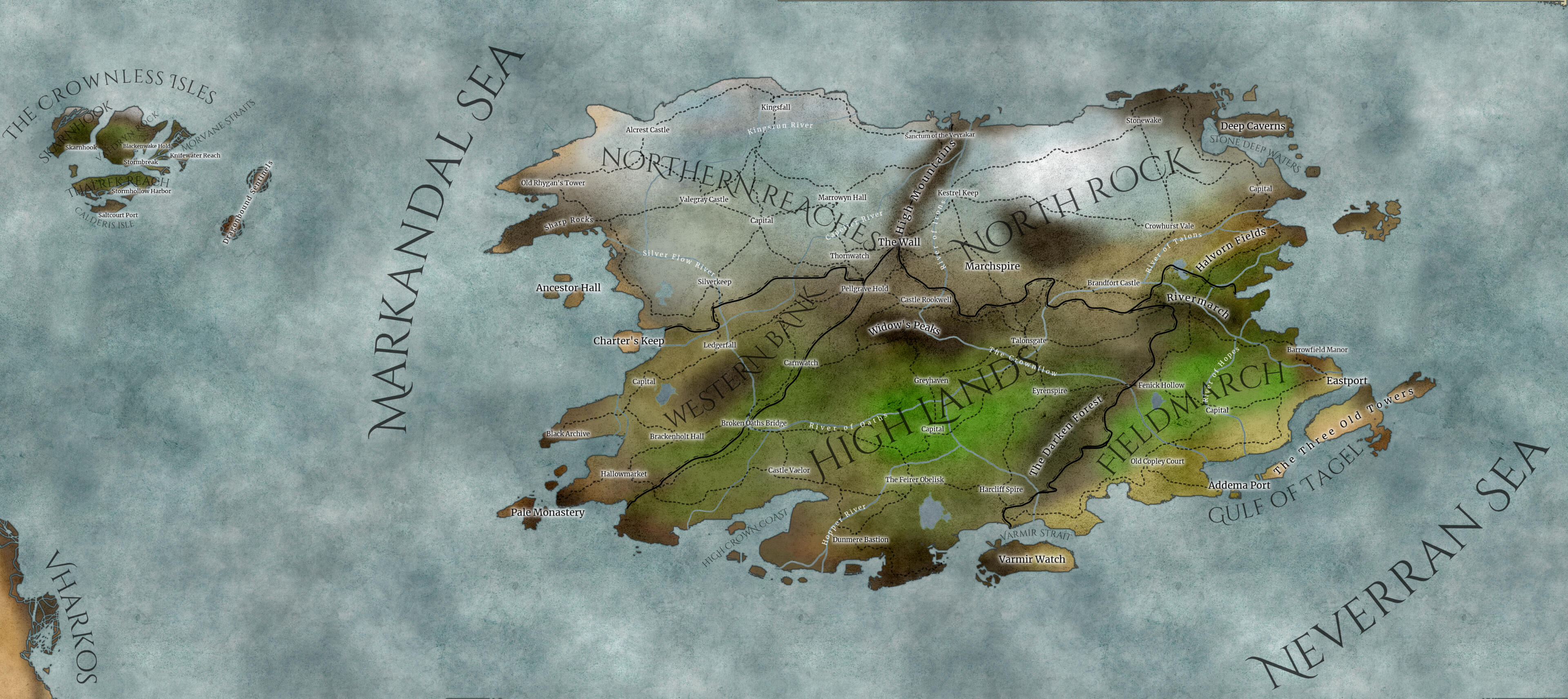
Averon is ruled by five Great Houses, who in turn command dozens of lesser vassal houses. House Beorthean, House Aerien, House Verasir, House Skant, and House Tagel are the five Great Houses that emerged after the Sundering of Crowns, which ended the Old Kingdom over a thousand years before the series begins. Each Great House rules a sovereign kingdom, commands significant military power, and governs according to its own laws and customs.Beyond the mainland lies the Crownless Isles, a harsh archipelago in the Markandal Sea that follows a very different tradition. Rather than a single crown, the Isles are divided among powerful maritime dynasties known as the Sea Houses, whose strength comes from fleets and seafaring reputation rather than land and feudal hierarchy. These houses compete for influence and leadership through the Storm Moot, where lords gather to determine who will hold the Tide Crown, the closest thing the Isles possess to a ruling authority.Long before the Old Kingdom, however, the continent was once dominated by the ancient Empire of Gyrok, whose throne was held by the dragon-ruling Great House Helyrion. Known as the Dragon Sovereigns, House Helyrion was believed to possess traces of dragon blood, allowing its rulers to command the loyalty of living dragons and maintain power through the legendary Dragon Throne.A list of the Great Houses of Averon and the dominant Sea Houses of the Crownless Isles, along with some of their more significant vassals, follows:
House Beorthean of Kingsreach: rulers of the Northern Reaches, the northernmost and most traditionally royal kingdom of Averon, known for its harsh coasts, fortified borders, and Old Kingdom precedent. Led by King Cassian Beorthean.House Aerien of Highfall: rulers of the High Lands, an upland kingdom governed through rigid hierarchy, centralized authority, and a court where power is maintained through discipline and control. Led by Queen Ameria Aerien, whose heir is Prince Auridean Aerien.House Skant of Charterfall: rulers of the Western Bank, a river-bound kingdom governed by charter law, record, and procedure, where power is enforced through ink as often as steel. Led by Queen-Regnant Elsveth Skant, whose heir is Prince Jurien Skant.House Tagel of Wheaten: rulers of Fieldmarch, the agrarian heartland kingdom of Averon, whose strength lies in grain, rivers, and the power to feed or starve the continent. Led by King Halric Tagel, whose heir is Prince Edrin Tagel.House Verasir of Ironwatch: rulers of North Rock, a militarized kingdom of fortresses, border campaigns, and iron discipline, where authority must be visible, enforced, and earned repeatedly. Led by King Vorun Verasir, whose heir is First Prince Dain Verasir.
• House Thorne of Thornwatch: vassals of House Beorthean who rule the southern border fortress guarding the Wall between the Northern Reaches and the High Lands. Led by Lord Garrith Thorne, whose heir is Brannik Thorne.• House Alcrest of Alcrest Castle: vassals of House Beorthean who rule the western coastline along the Markandal Sea. Led by Lord Harren Alcrest.• House Valegray of Valegray Castle: vassals of House Beorthean who rule interior lands and roads northwest of Kingsreach. Led by Lord Vodrin Valegray.• House Marrowyn of Marrowyn Hall: vassals of House Beorthean who rule lands near the western foothills of the High Mountains. Led by Lord Edrin Marrowyn.
• House Dunmere of Dunmere Bastion: vassals of House Aerien who hold Dunmere Bastion and command key Crownsguard training and readiness. Led by Lord Bastien Dunmere.• House Rookwell of Castle Rookwell: vassals of House Aerien who rule the High Lands passes and the western approaches, sealing routes under winter law and reinforcing the frontier. Led by Lord Caerwyn Rookwell.• House Harcliff of Harcliff Spire: vassals of House Aerien who hold Harcliff Spire and press for unwavering obedience to Aerien authority. Led by Lord Maeron Harcliff.• House Vaelor of Castle Vaelor: vassals of House Aerien who rule Castle Vaelor and wield influence through silence, rumor, and the suggestion of bloodline leverage. Led by Lord Seric Vaelor.
• House Brackenholt of Brackenholt Hall: vassals of House Skant who use old testimony and legal precedent to shape what counts as lawful resistance. Led by Lord Othric Brackenholt.• House Pellgrave of Pellgrave Hold: vassals of House Skant who control key crossings and invoke emergency winter tolls and inspections to slow movement without open defiance. Led by Lord Ulric Pellgrave.• House Quillford of Ledgerfall: vassals of House Skant who control charters and birth records, deciding which claims are remembered, delayed, or quietly erased. Led by Lord Renalt Quillford.• House Carn of Carnwatch: vassals of House Skant who enforce Skant decrees with blunt efficiency and readiness for open conflict. Led by Lord Veyrin Carn.
• House Barrowfield of Barrowfield Manor: vassals of House Tagel who hold key estates and warn that prolonged war will starve the realm, positioning themselves as indispensable to whoever secures the harvest first. Led by Lord Merrek Barrowfield.• House Addema of Addema Port: vassals of House Tagel who control river tolls, barge traffic, and mercantile choke points, profiting quietly from delay and leverage. Led by Lord Silas Addema.• House Copley of Old Copley Court: vassals of House Tagel who cling to early submission precedent and push neutrality to preserve wealth regardless of the victor. Led by Lord Henric Copley.• House Fenick of Fenick Hollow: vassals of House Tagel who rule modest lands and balance loyalty with pragmatism as the realm hardens. Led by Lord Rhyan Fenick.
• House Kestrelmarch of Kestrel Keep: vassals of House Verasir who hold Kestrel Keep and keep their borders battle-ready, following internal command as much as royal decree. Led by Lord Thalen Kestrelmarch.• House Brandfort of Brandfort Castle: vassals of House Verasir who reinforce stone and supply lines, believing law will fail before steel does. Led by Lord Varrick Brandfort, whose heir is Aric Brandfort.• House Halvorn of Halvorn Fields: vassals of House Verasir who fear renewed war will ruin their lands and pressure the crown to act decisively. Led by Lord Cethric Halvorn.• House Crowhurst of Crowhurst Vale: vassals of House Verasir who maintain rapid-deployment riders and wait for the first banner that offers real war. Led by Lord Alric Crowhurst.
• House Vaedryn of Blackwake Hold: rulers of Vaedryn Rock, the largest and oldest island of the Crownless Isles, whose captains claim descent from the first sea lords who settled the archipelago. Their authority rests on tradition, reputation, and the belief that the oldest bloodlines should guide the Isles. Previously led by Lord Fael Vaedryn before Spring 1103 ASC. Now it is led by Lord Dagren 'Black' Vaedryn.• House Thalrek of Stormhollow Harbor: rulers of Thalrek Reach, the long central island whose deep anchorages and great shipyards support some of the strongest fleets in the Markandal Sea. Their captains believe strength at sea proves leadership more than lineage ever could. Led by Lady Serissa Thalrek.• House Morvane of Knifewater Reach: rulers of the Morvane Straits, the eastern chain of jagged islands and dangerous channels that guard the narrow sea passages of the archipelago. Their navigators dominate the reef-filled waters and are feared for their ambush tactics. Led by Lord Dren Morvane.• House Skarn of Skarnhook: rulers of the harsh northwestern island of Skarnhook, whose storm-beaten coves produce the fiercest raiders of the Isles. Their fleets value strength, intimidation, and reputation earned through conquest upon the sea. Led by Lord Varek Skarn.• House Calderis of Saltcourt Port: rulers of Calderis Isle, a strategically placed harbor island where island captains and mainland merchants often meet in uneasy negotiation. Their influence flows through trade, diplomacy, and control of the archipelago’s central sea routes. Led by Lord Balric Calderis.
House Helyrion was the ruling dynasty of the ancient Empire of Gyrok, a bloodline known throughout the old world as the Dragon Sovereigns.• Members of House Helyrion were believed to carry traces of dragon blood in their lineage, allowing them to stand before dragons without fear and command their loyalty.
• Dragons did not serve the Helyrion rulers through chains or force, but instead recognized their authority through blood, submitting naturally to their kings and queens.
• During the height of Gyrok, the Dragon Throne was held exclusively by House Helyrion, whose reign shaped the empire’s belief that those with dragon blood were destined to rule mankind.
• When the Empire of Gyrok collapsed, House Helyrion became the target of violent purges by rival factions and rising powers fearful that the dragon dynasty might reclaim the empire.
• Many members of the Helyrion family were killed or persecuted, while others fled across Averon to Vharkos under false identities to escape extinction. Over generations the bloodline fragmented and its name vanished from recorded history, leaving only myths about dragon-riding rulers.
• The rise of the Old Kingdom further erased the memory of House Helyrion and the Empire of Gyrok, as its scholars and priests reshaped history and dismissed dragons as creatures of legend.
• Only the secret order known as the Veyrakar preserved knowledge of the Helyrion dynasty and their connection to dragons.
• The Veyrakar believed the blood of House Helyrion still exists in the world, hidden among lesser noble lines where its true origin has long been forgotten.
• Rovan Thorne of House Thorne is secretly believed by the Veyrakar to be the only surviving descendant of House Helyrion after the dragons of the Sanctum of the Veyrakar recognized his blood during the Choosing.
The High Lands
Ruled by House Aerien from the capital of Highfall, the High Lands are a realm of elevation, discipline, and symbolic authority, where rule is reinforced through ritual, fear, and the lingering prestige of griffin mastery. Power here is public, uncompromising, and deeply entwined with the Ascendant Creed, making the High Lands both revered and resented across the continent.The Northern Reaches
Governed by House Beorthean from Kingsreach, the Northern Reaches preserve the most intact remnants of Old Kingdom customs, valuing honor, oath-keeping, and restraint over spectacle. Its people are shaped by harsh climates and long memory, and though the crown is worn lightly, legitimacy here is judged more severely than anywhere else in Averon.North Rock
A hard, militarized kingdom ruled by House Verasir from Ironwatch, North Rock is defined by fortified borders, constant readiness, and respect earned through strength rather than lineage. Command, not ceremony, determines authority, and rulers who cannot defend their land do not keep it for long.The Western Bank
Ruled by House Skant from Charterfall, the Western Bank is the legal and bureaucratic heart of Averon, where written record, precedent, and procedure outweigh blood or battlefield valor. Power is exercised through charters, tolls, and the Concord’s ledgers, making the realm outwardly orderly and quietly ruthless.Fieldmarch
Under House Tagel and centered on the capital of Wheaten, Fieldmarch is the agricultural backbone of the continent, controlling grain, rivers, and survival itself. Its authority is practical rather than glamorous, and while its rulers rarely boast of dominance, every kingdom feels Fieldmarch’s influence when harvests fail or granaries close.
The High Lands Kingdom forms the geographic and political heart of Averon, rising into rolling highlands threaded with ancient roads and symbolic power.
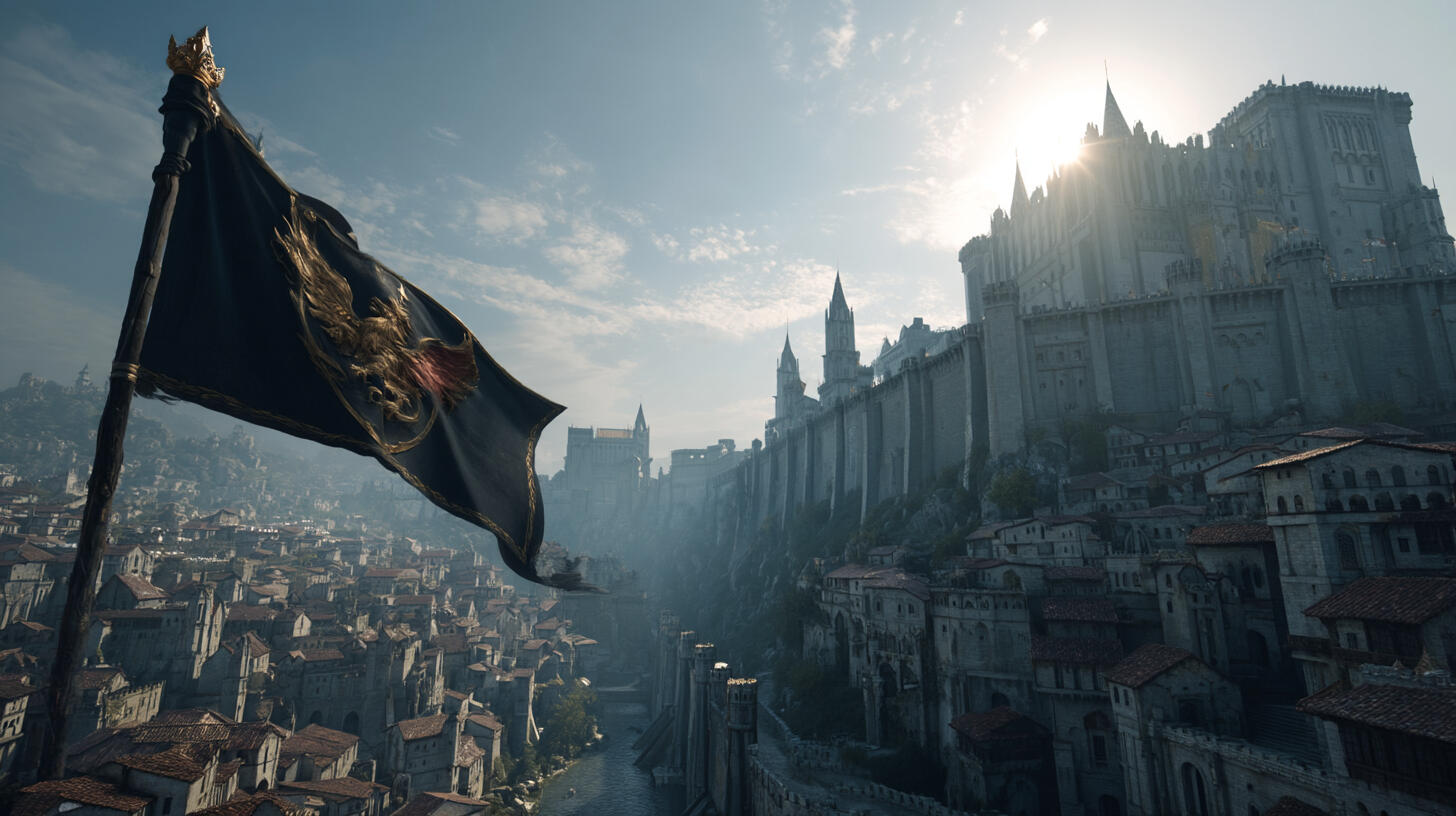
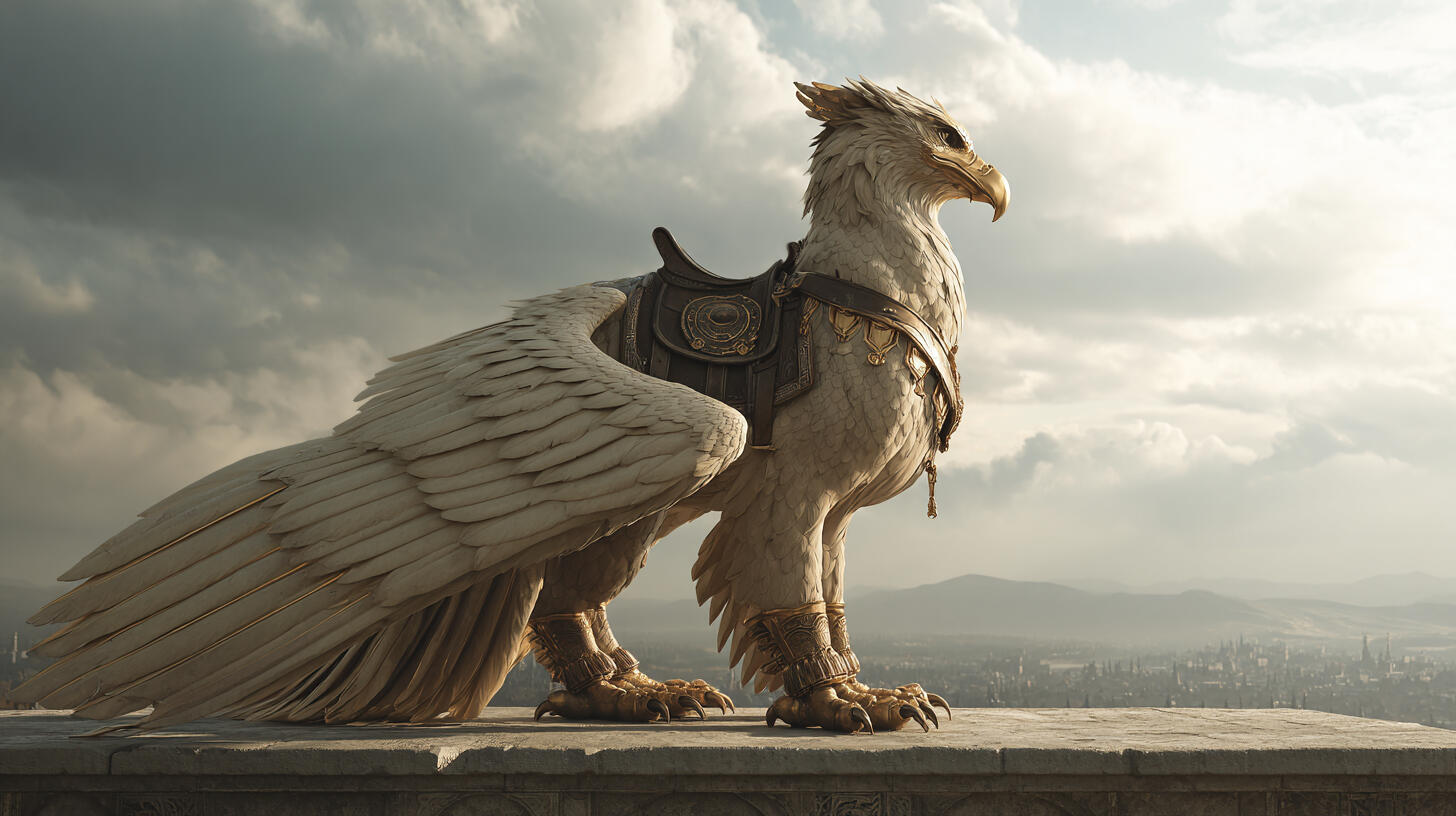
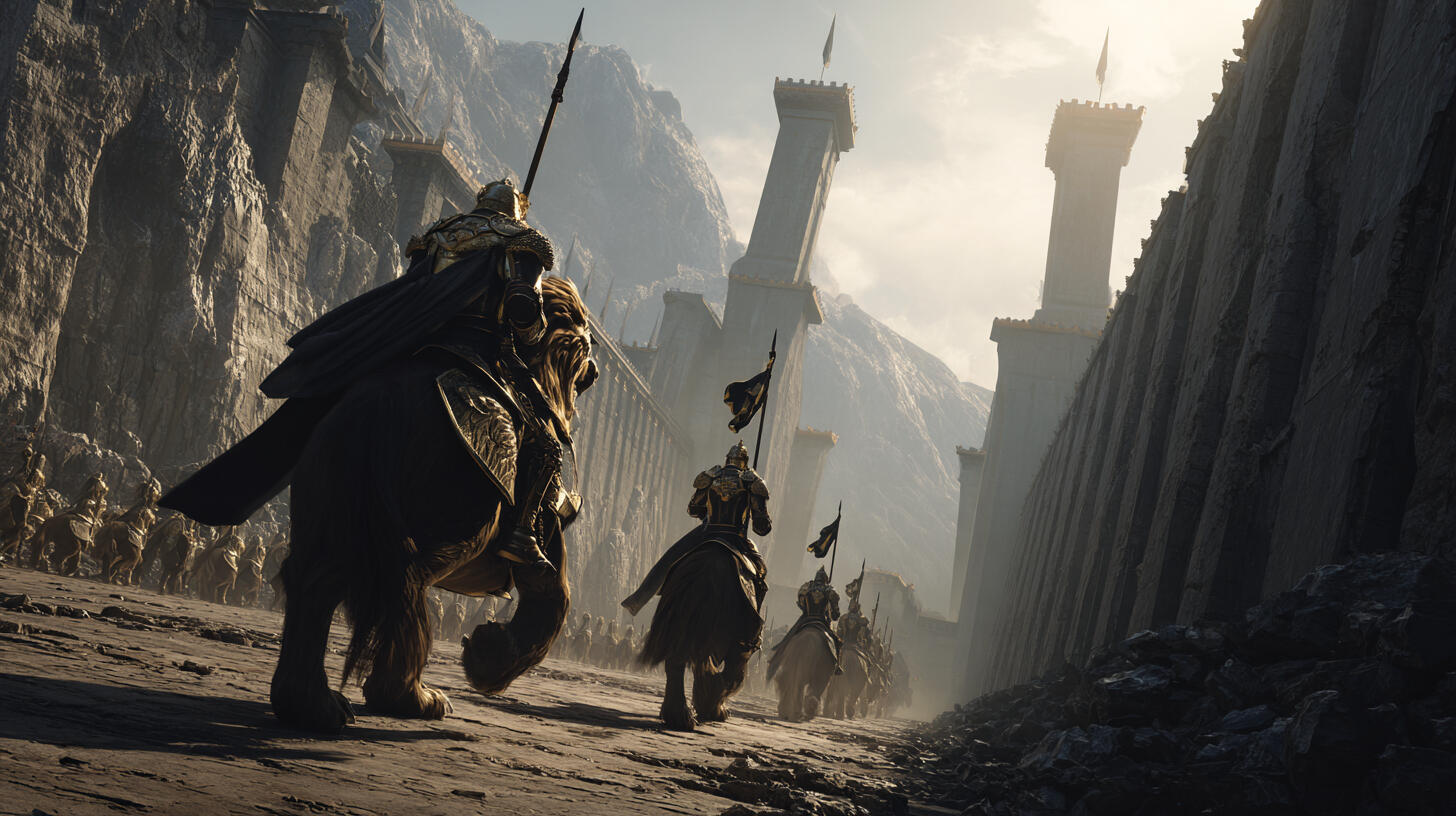
The High Lands Kingdom forms the geographic, political, and ideological heart of Averon, rising into rolling uplands threaded with ancient roads, fortified passes, and symbols of authority that long predate the Sundering of Crowns. Ruled from the capital of Highfall, the kingdom derives its power not from abundance or conquest, but from legitimacy, tradition, and control of continental governance. The Crownflow River cuts through the region, sustaining settlements and serving as a ceremonial artery tied to rulership rites, while cities like Greyhaven function as critical crossroads linking westward trade, northern military routes, and eastern border roads. The High Lands are heavily fortified, bordered by The Wall and Thornwatch to the north, with Widow’s Peaks and Castle Rookwell guarding key approaches.The realm’s southern edge opens onto the High Crown Coast, where Dunmere Bastion and Harcliff Spire defend against naval threat along the Varmir Strait, while the Darken Forest forms a natural southeastern barrier separating the kingdom from Fieldmarch. Authority here is absolute and visible, enforced through law, ritual, and the ever-present Crownsguard, and shaped by House Aerien, whose rule emphasizes order, fear-backed stability, and public legitimacy over mercy or populism.
| Capital: | Highfall |
| Ruling House: | House Aerien |
| Current Monarch: | Queen Ameria Aerien |
| Political Role: | Central authority of Averon; legitimizer of rule, law, and succession |
| Geography: | Rolling highlands, fortified passes, coastal cliffs, central river basin |
| Major Locations: | Highfall, Greyhaven, Talonsgate, Castle Rookwell, Widow’s Peaks, Dunmere Bastion, Harcliff Spire, Eyrenspire, Feirer Obelisk |
| Religion: | Ascendant Creed dominant |
| Culture: | Formal, hierarchical, disciplined; public ritual and visible justice |
| Law: | Emphasizes acclamation, crown protection, sacred sites, and exemplary punishment |
| Reputation: | Authoritative, austere, feared rather than loved |
The Northern Reaches Kingdom occupies the far northwestern edge of Averon, bordered by the Markandal Sea to the west and north and defined by cold coasts, old stone, and lingering imperial memory.
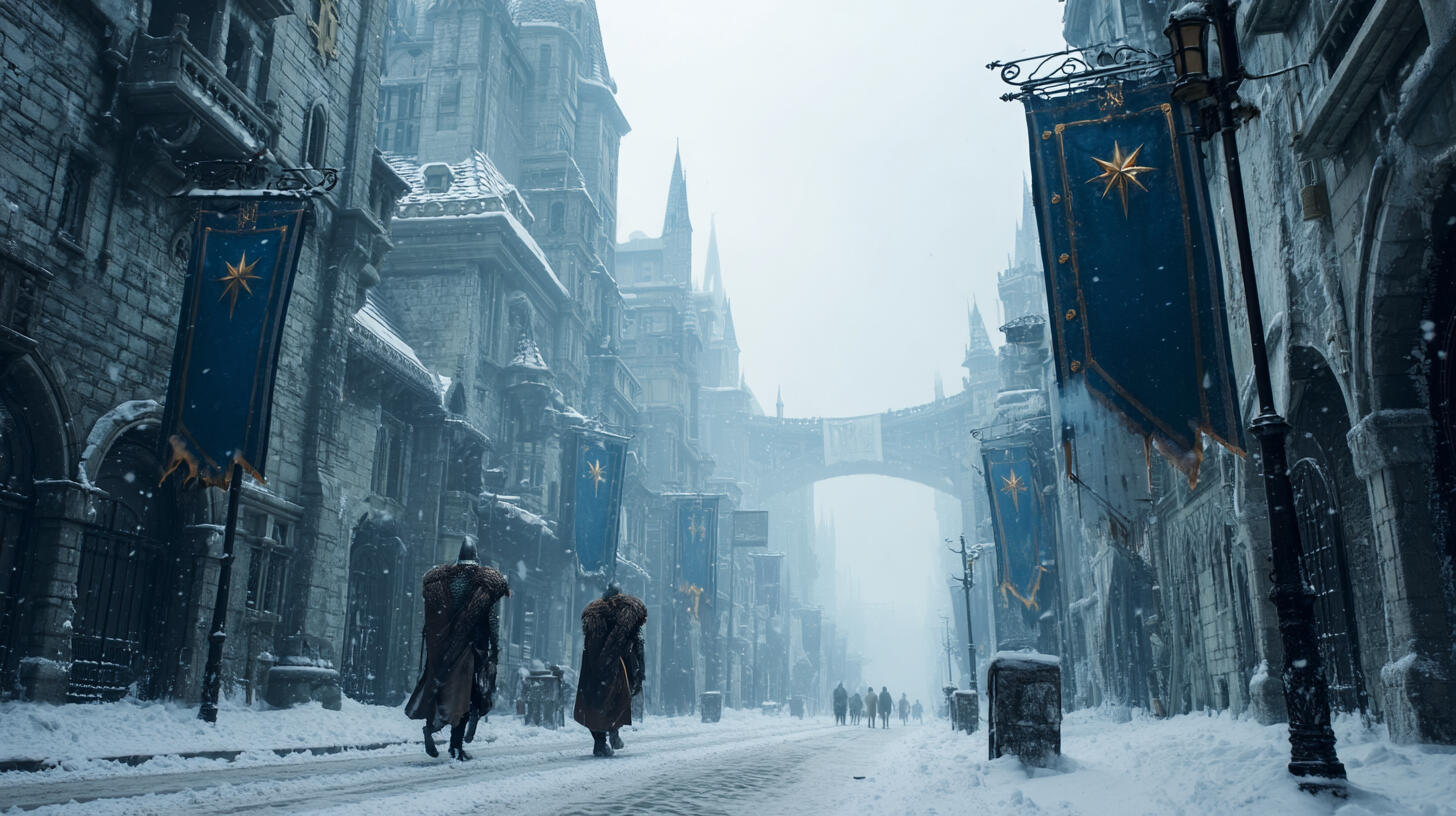
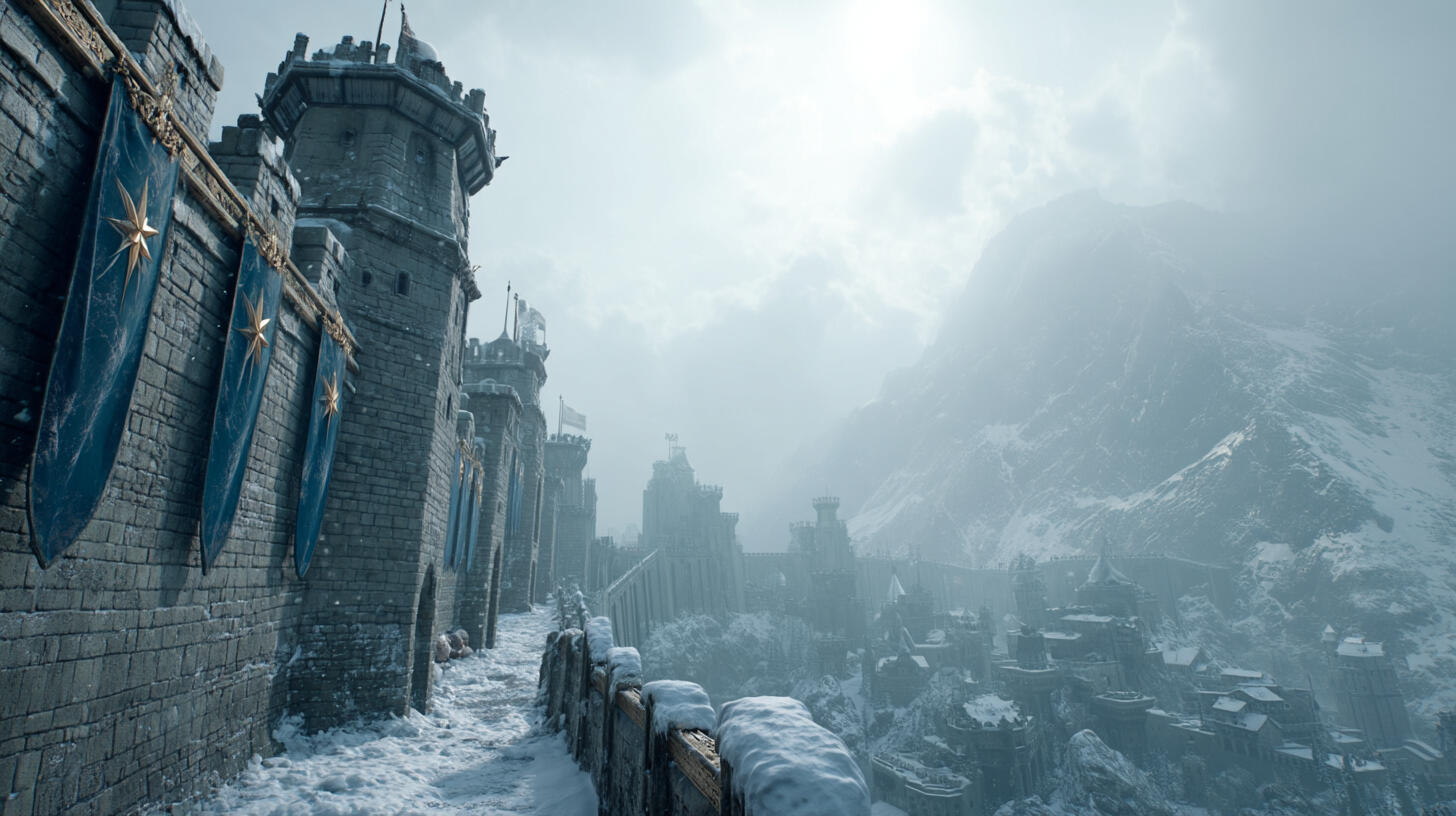
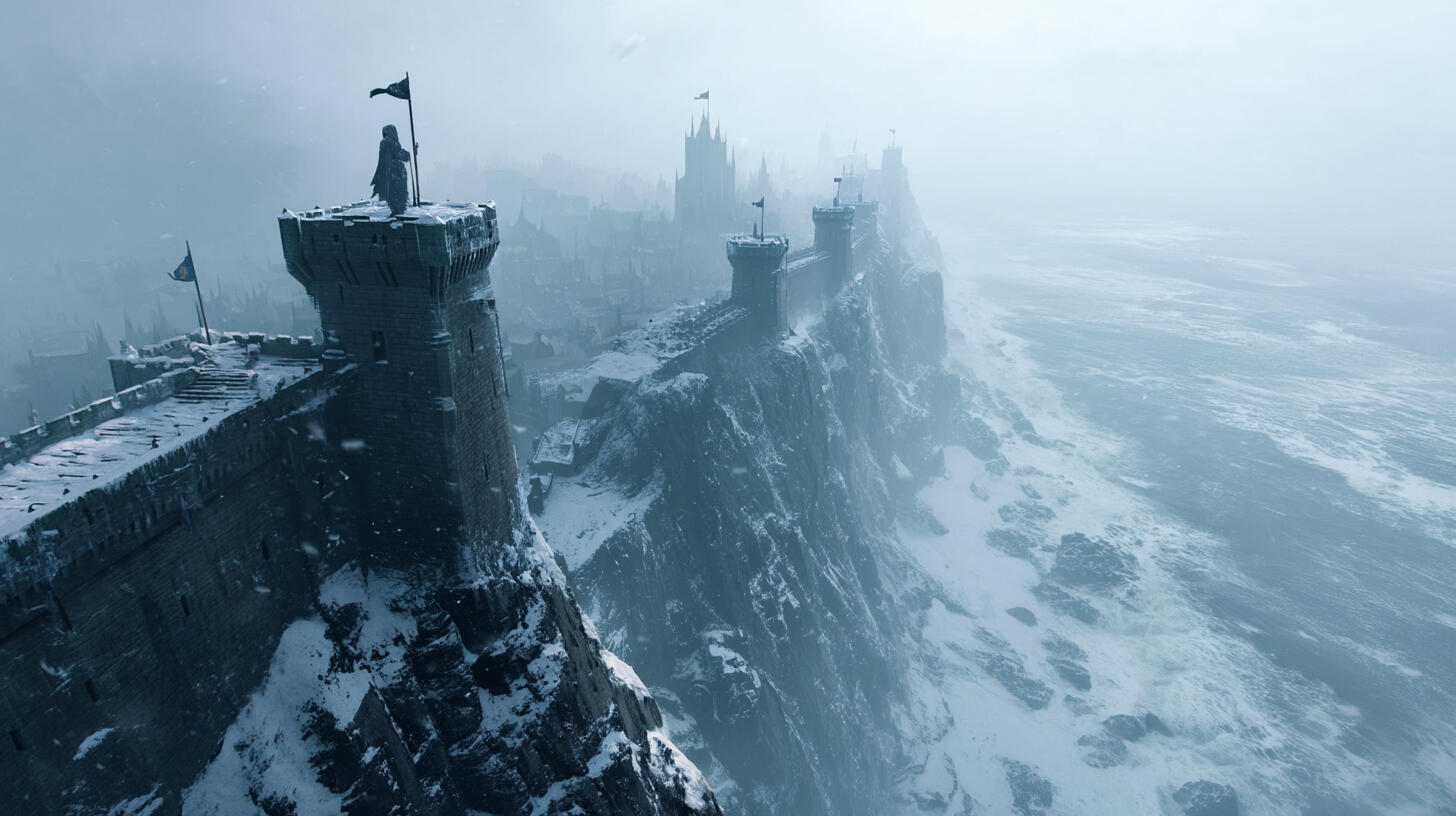
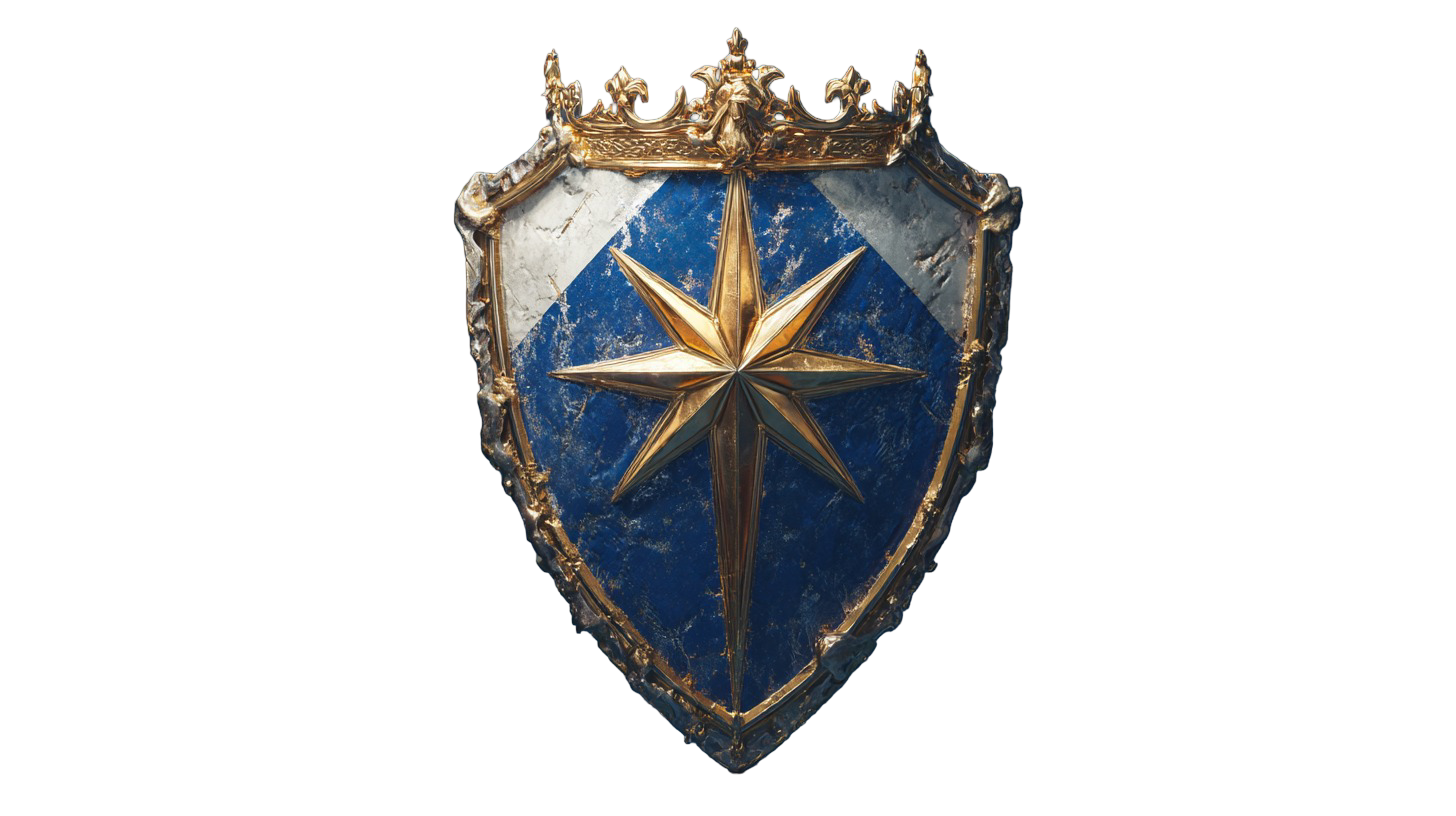
The Northern Reaches Kingdom occupies the far northwestern edge of Averon, shaped by cold seas, ancient stone, and lingering memory of the Old Kingdom’s ideals. Ruled from the inland capital of Kingsreach, deliberately set south of the exposed coast, the realm balances maritime vigilance with inward-looking tradition. The northern shoreline is crowned by Kingsfall, an ancient imperial seat overlooking the Markandal Sea, while the western coast is guarded by Alcrest Castle and Old Rhygan’s Tower, standing watch over the treacherous Sharp Rocks.Offshore to the southwest lies Ancestor Hall, a solemn island tied to lineage, burial, and oath remembrance. Inland, the Silver Flow River runs south past Silverkeep, carrying both trade and authority into the Western Bank, while the eastern interior rises sharply into the High Mountains, forming a natural barrier against North Rock. Noble power is anchored by fortified halls such as Valegray Castle in the northwest and Marrowyn Hall near the mountain foothills in the southeast, reinforcing old alliances and guarded roads. At the southern edge of the kingdom, Thornwatch stands fifteen miles from the The Wall, marking the hard border with the High Lands and serving as both fortress and ideological boundary.The Northern Reaches value honor, oaths, and restraint above ambition, holding fast to customs that predate the Sundering and judging rulers not by expansion, but by dignity, memory, and endurance.
| Capital | Kingsreach |
| Ruling House | House Beorthean |
| Current Monarch | King Cedric Beorthean |
| Political Role | Keeper of Old Kingdom customs and oath-bound legitimacy |
| Geography | Cold coastlines, inland highlands, mountain barriers, river valleys |
| Major Locations | Kingsreach, Kingsfall, Silverkeep, Thornwatch, Valegray Castle, Marrowyn Hall |
| Sacred / Ancestral Sites | Ancestor Hall |
| Religion | Traditional reverence, tolerant of older belief structures |
| Culture | Defensive, disciplined, oath-bound rather than expansionist |
| Law | Oath memory, restrained justice, lineage verification |
| Reputation | Honorable, austere, unyielding in memory and principle |
North Rock Kingdom stretches across the northeastern highlands of Averon, a region shaped by stone, war, and constant readiness.
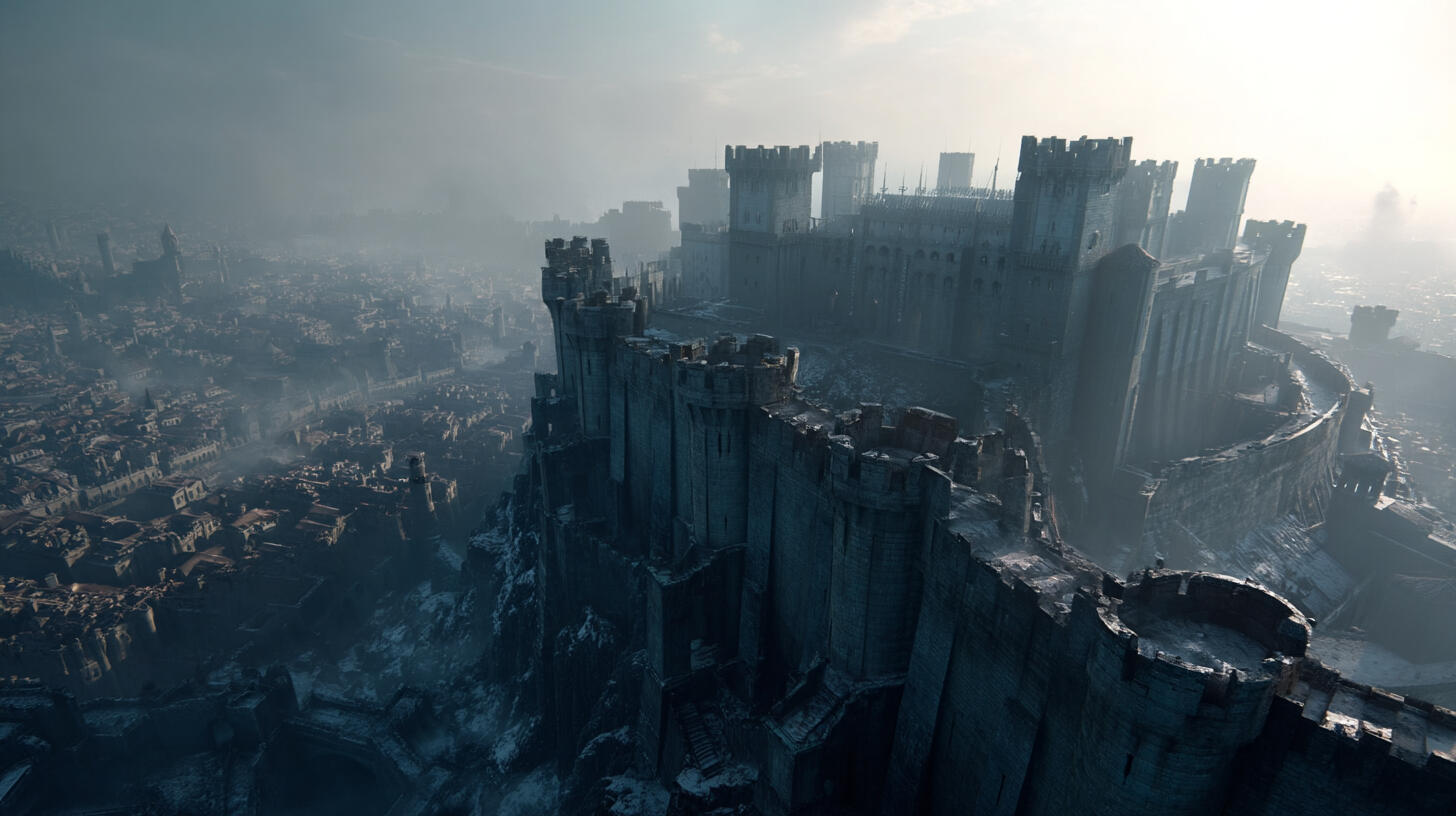
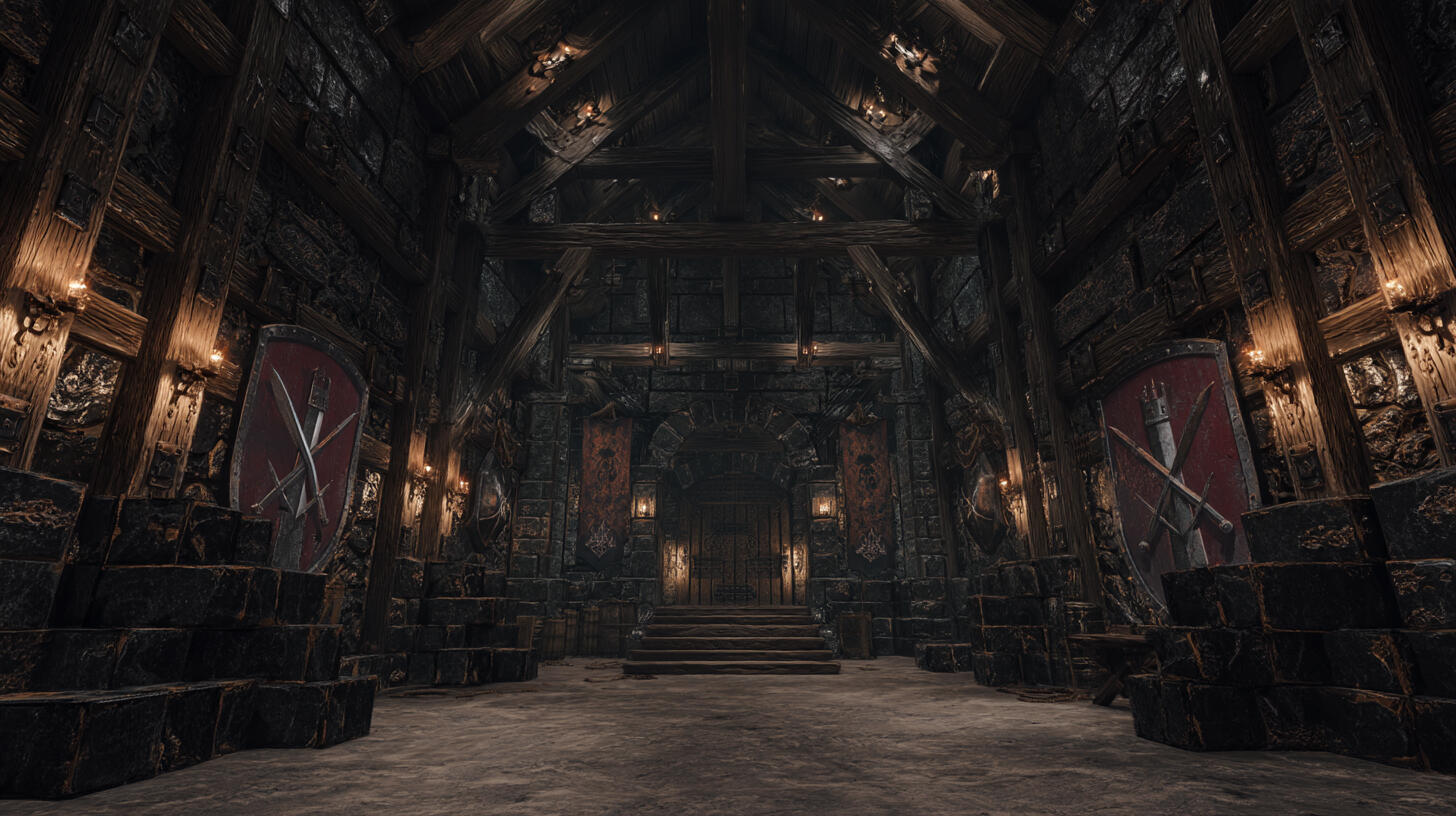
North Rock Kingdom spans the harsh northeastern highlands of Averon, a land defined by stone, elevation, and perpetual readiness for war. Entered primarily through the High Mountain passes near Kestrel Keep, the realm is structured around defense, mobility, and command rather than comfort or ceremony. Its capital, Ironwatch, stands east of the main passes where fortresses, garrisons, and military roads converge, functioning less as a courtly seat and more as a strategic command center. South of the mountains lies Marchspire, anchoring the western approaches, while routes eastward are guarded by Brandfort Castle, beyond which the land opens into Crowhurst Vale and the broad Halvorn Fields, regions prized for cavalry training and mass levies.To the north, the land slopes toward the sea, where Stonewake serves as the kingdom’s primary port, facing the dangerous Stone Deep Waters, with the Deep Caverns lying offshore and largely unexplored. The Ironvein River runs south along the western edge of the realm, while the Talonstride River cuts southeast through Rivermarch, linking North Rock directly to Fieldmarch’s grain routes.North Rock governance is unapologetically martial, valuing strength, command, and proven capability above blood alone, and its rulers are judged not by lineage but by their ability to hold ground, command loyalty, and respond decisively to threat.
| Capital: | Ironwatch |
| Ruling House: | House Verasir |
| Current Monarch: | King Vorun Verasir |
| Political Role: | Continental military anchor and frontier enforcer |
| Geography: | Mountain passes, highlands, open cavalry plains, northern coast |
| Major Locations: | Ironwatch, Marchspire, Stonewake, Rivermarch |
| Key Fortresses: | Kestrel Keep, Brandfort Castle |
| Religion: | Pragmatic observance, faith secondary to survival |
| Culture: | Militarized governance, trial by command, constant readiness |
| Law: | Martial authority, swift frontier justice, command legitimacy |
| Reputation: | Brutal, efficient, unyielding, feared rather than admired |
The Western Bank Kingdom runs along Averon’s western coast, shaped by rivers, records, and relentless administration.
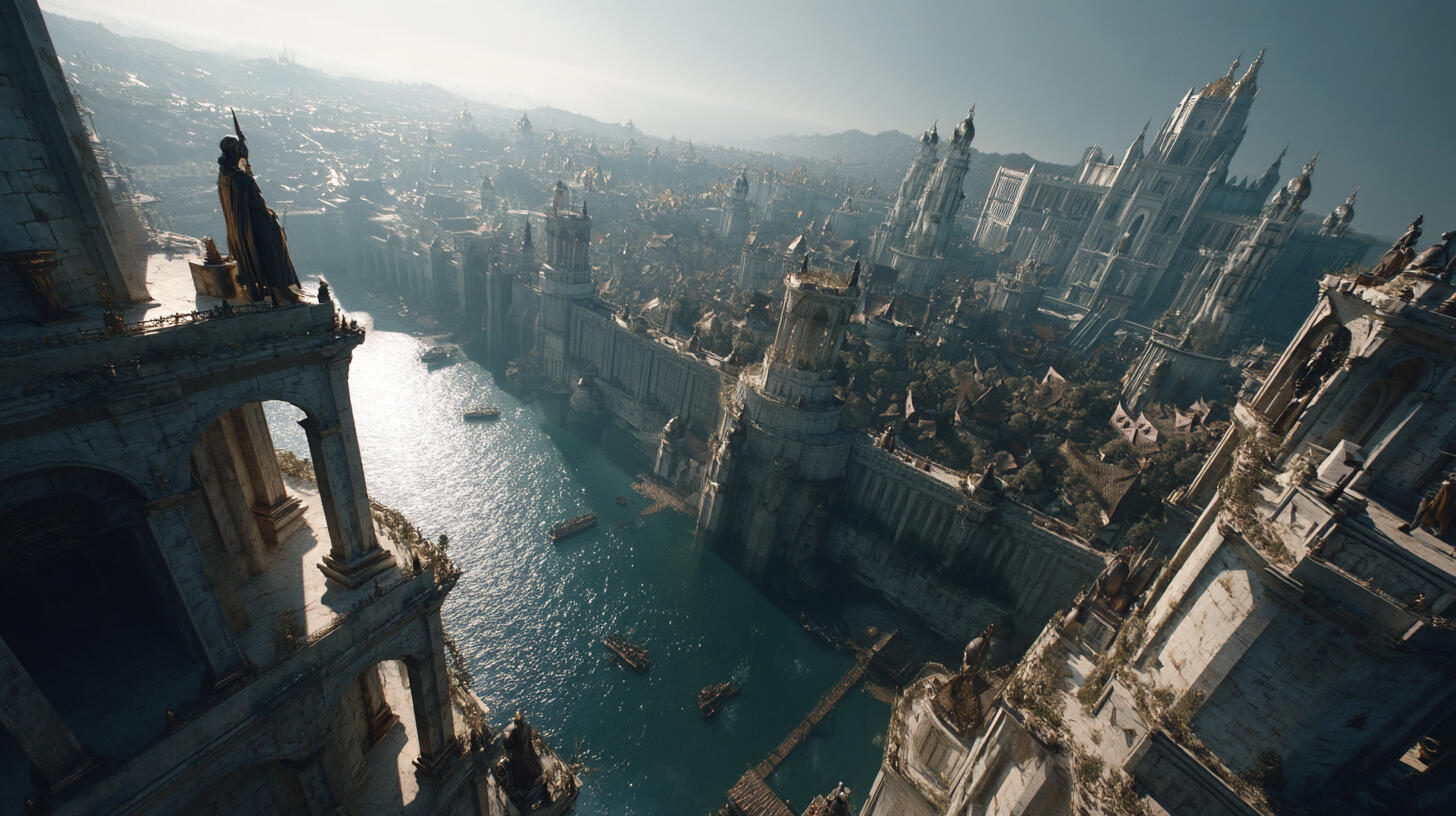
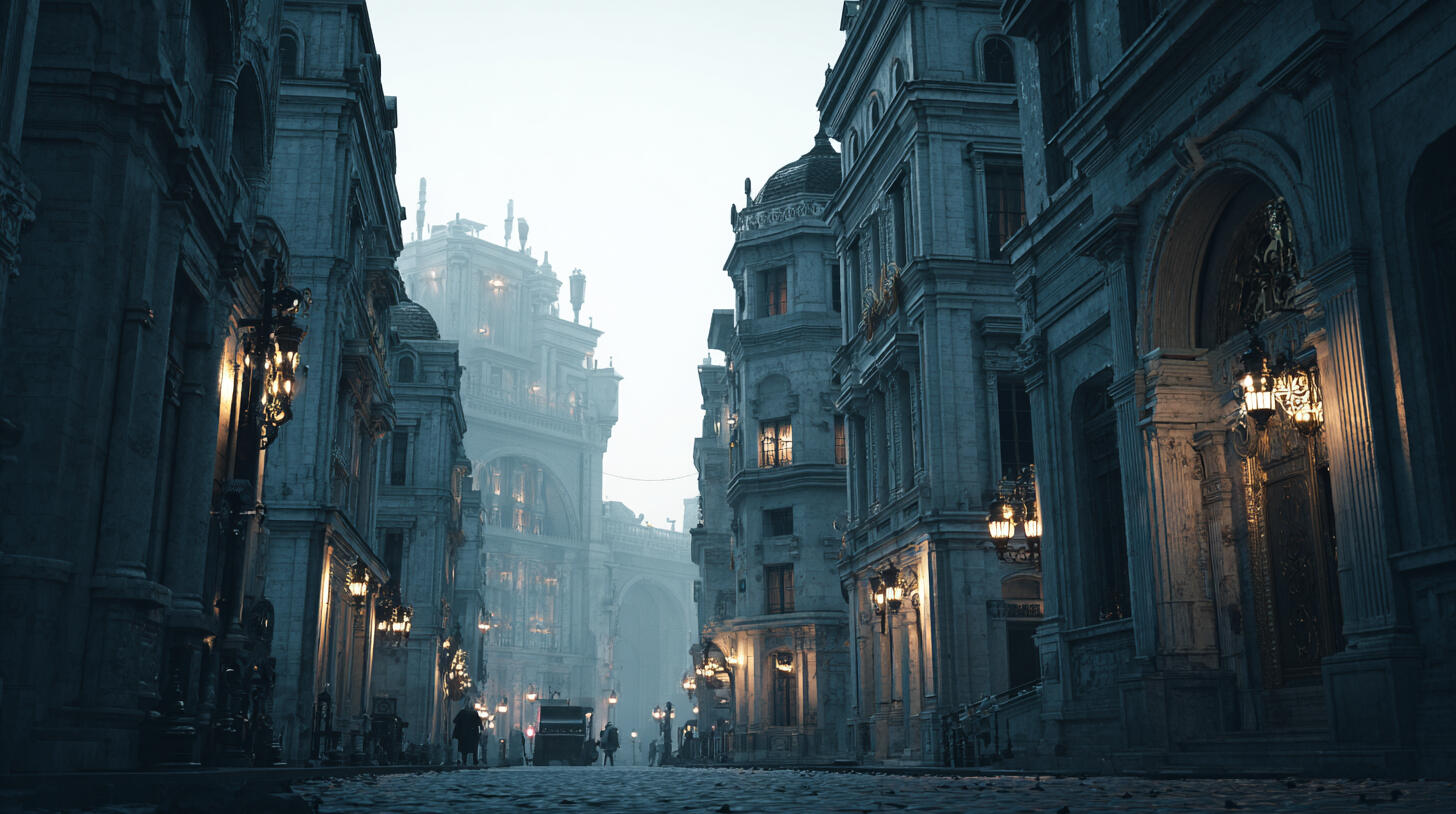
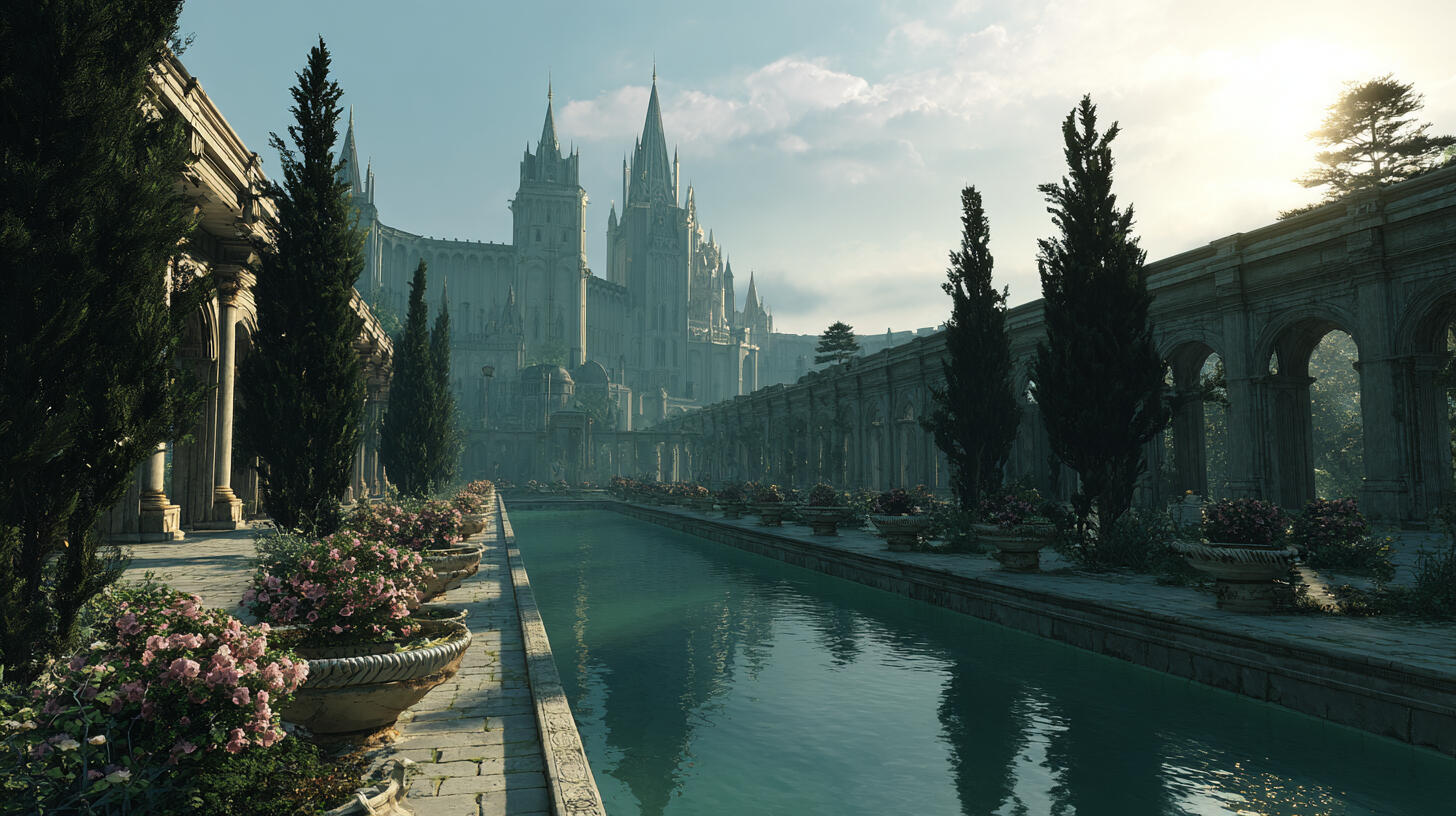
The Western Bank Kingdom stretches along Averon’s western coastline, a realm shaped not by armies or ancient bloodlines, but by records, rivers, and unyielding legal authority. Its power flows southward with the Silver Flow River, which enters the region from the Northern Reaches through Silverkeep, widens near Ledgerfall, and empties toward the coast near Charter’s Keep along the Markandal Sea. The capital, Charterfall, sits just inland from the coast, deliberately placed to balance maritime trade access with administrative security, and serves as the legal and bureaucratic heart of the kingdom. Inland routes from Ledgerfall pass Carnwatch and lead toward Brackenholt Hall, where lesser houses enforce precedent and procedure rather than force of arms.Along the eastern border, travelers cross the River of Oaths at Broken Oaths Bridge, marking the boundary where Western Bank governance gives way to the High Lands’ authority. The southern coastline hosts Hallowmarket, a pressure outlet for trade and dispute, while the Black Archive occupies a secluded northern shore, safeguarding sealed records and contested claims.At the far southwestern edge of the realm stands the Pale Monastery, isolated on its own island above the sea, where the Concord maintains the official records, treaties, and lineages of all Averon.Western Bank rule is defined by documentation, precedent, and delay, where power is exercised through ink and seal rather than steel, and a claim unrecorded is treated as a claim that never existed.
| Capital: | Charterfall |
| Ruling House: | House Skant |
| Current Monarch: | Queen-Regnant Elsveth Skant |
| Political Role: | Legal, administrative, and archival authority of Averon |
| Geography: | Western coastline, river networks, inland administrative corridors |
| Major Locations: | Charterfall, Ledgerfall, Hallowmarket |
| Key Sites: | Charter’s Keep, Black Archive, Pale Monastery |
| Religion: | Formally observant, politically selective |
| Culture: | Bureaucratic, procedural, precedent-based |
| Law: | Written authority, sealed objection, ledger supremacy |
| Reputation: | Cold, obstructive, indispensable, quietly feared |
Fieldmarch Kingdom spreads across the fertile southeastern plains of Averon, defined by rivers, ports, and vast agricultural lowlands.
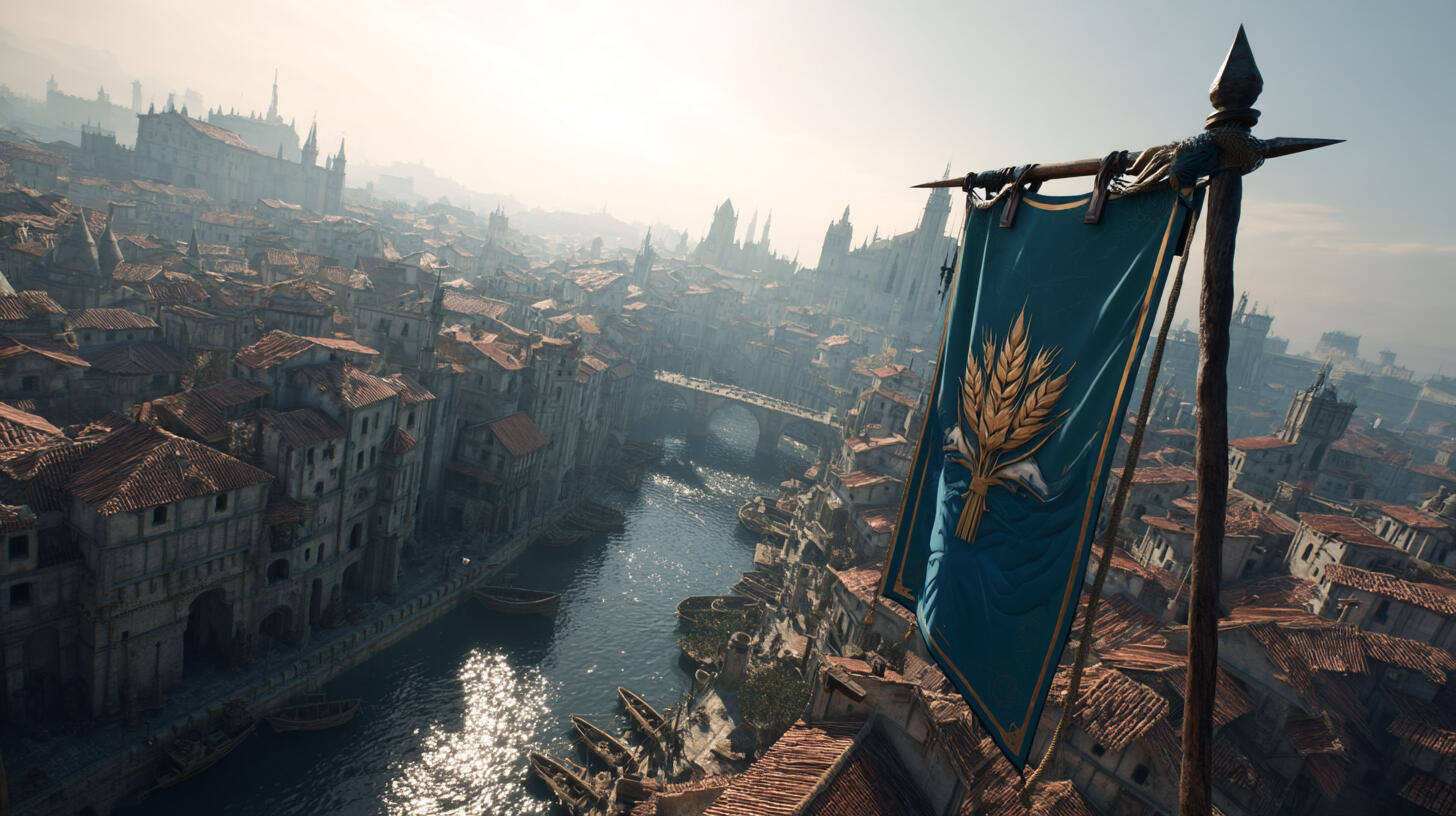
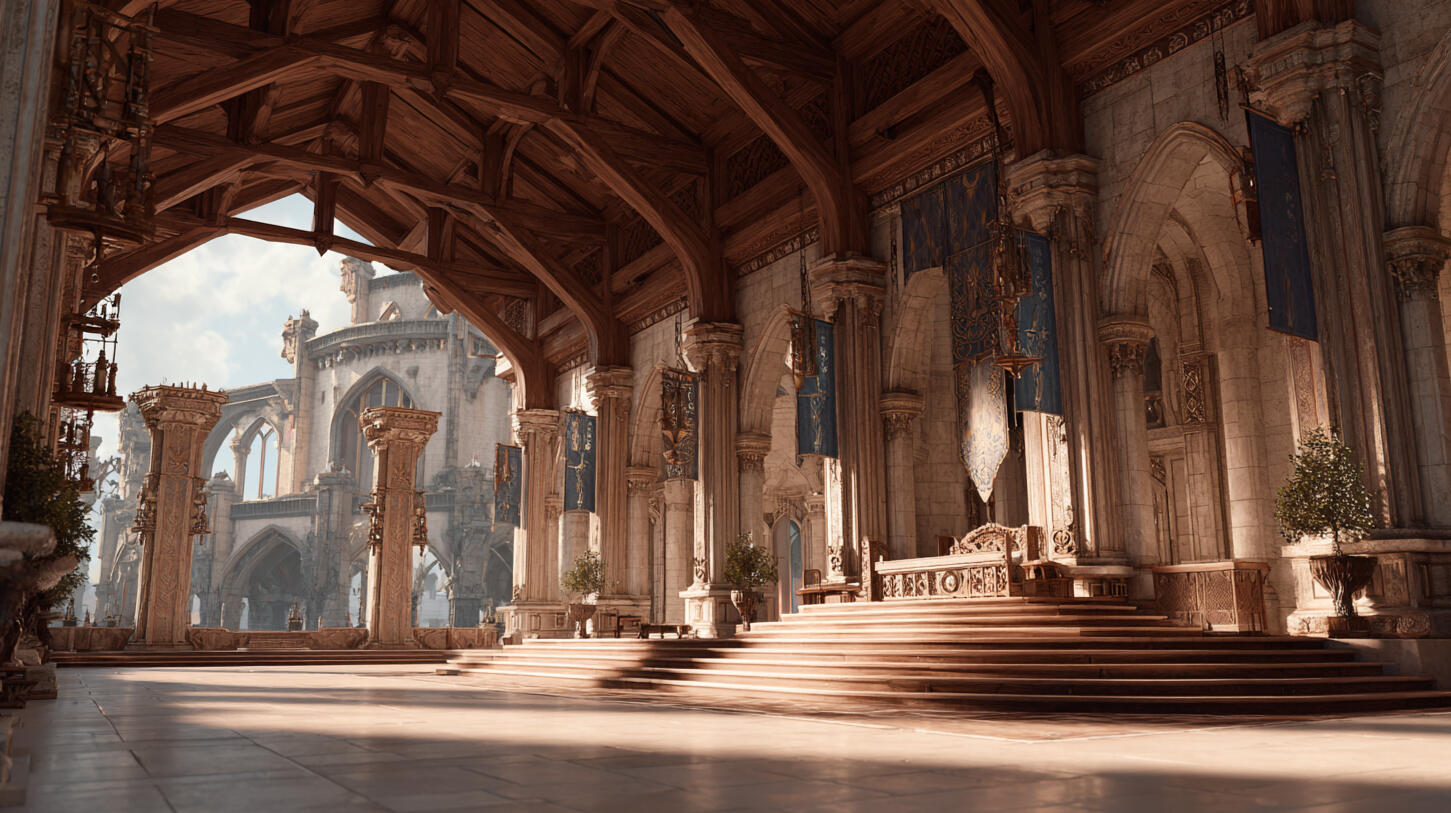
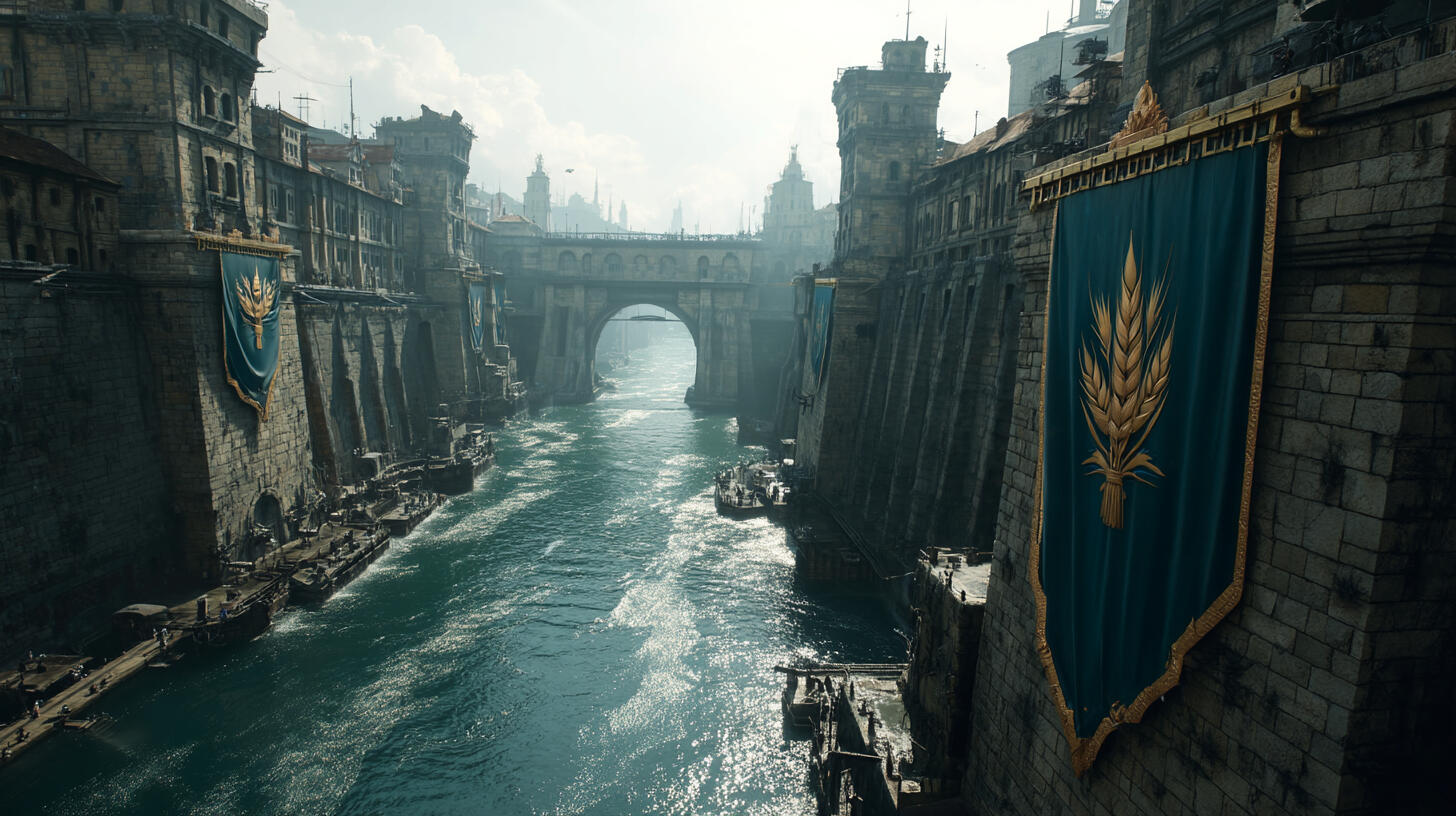
The Fieldmarch Kingdom spreads across the fertile southeastern plains of Averon, a land defined by grain, rivers, and the quiet power of sustenance rather than armies or law. Entering from the High Lands, travelers pass through the southern edge of the Darken Forest before emerging near Fenick Hollow, where marshland slowly gives way to managed farmland and drainage canals. The Crownflow River enters Fieldmarch from the northwest below the High Lands, bending south toward Addema Lock, where its waters are divided, regulated, and measured to sustain irrigation, river traffic, and famine reserves.North of the Crownflow, Barrowfield Manor dominates the largest continuous grain plains in Averon, while Old Copley Court lies southwest of the capital, anchoring some of the region’s oldest and most conservative farmland. The capital, Wheaten, stands inland on stable ground, deliberately removed from flood risk yet bound to every corner of the kingdom by roads and river tallies, connecting north to Rivermarch along the Talonstride River, east to Eastport on the Gulf of Tagel, and south to Addema Port, where river cargo meets open sea trade.Offshore, the Three Old Towers rise from separate islands southeast of Addema Port, while far to the southwest Varmir Watch commands the narrow Varmir Strait, controlling passage between the Gulf of Tagel and the Neverran Sea.Fieldmarch rule rests on preparation rather than conquest, where authority is judged by whether the realm survives winter fed, supplied, and stable.
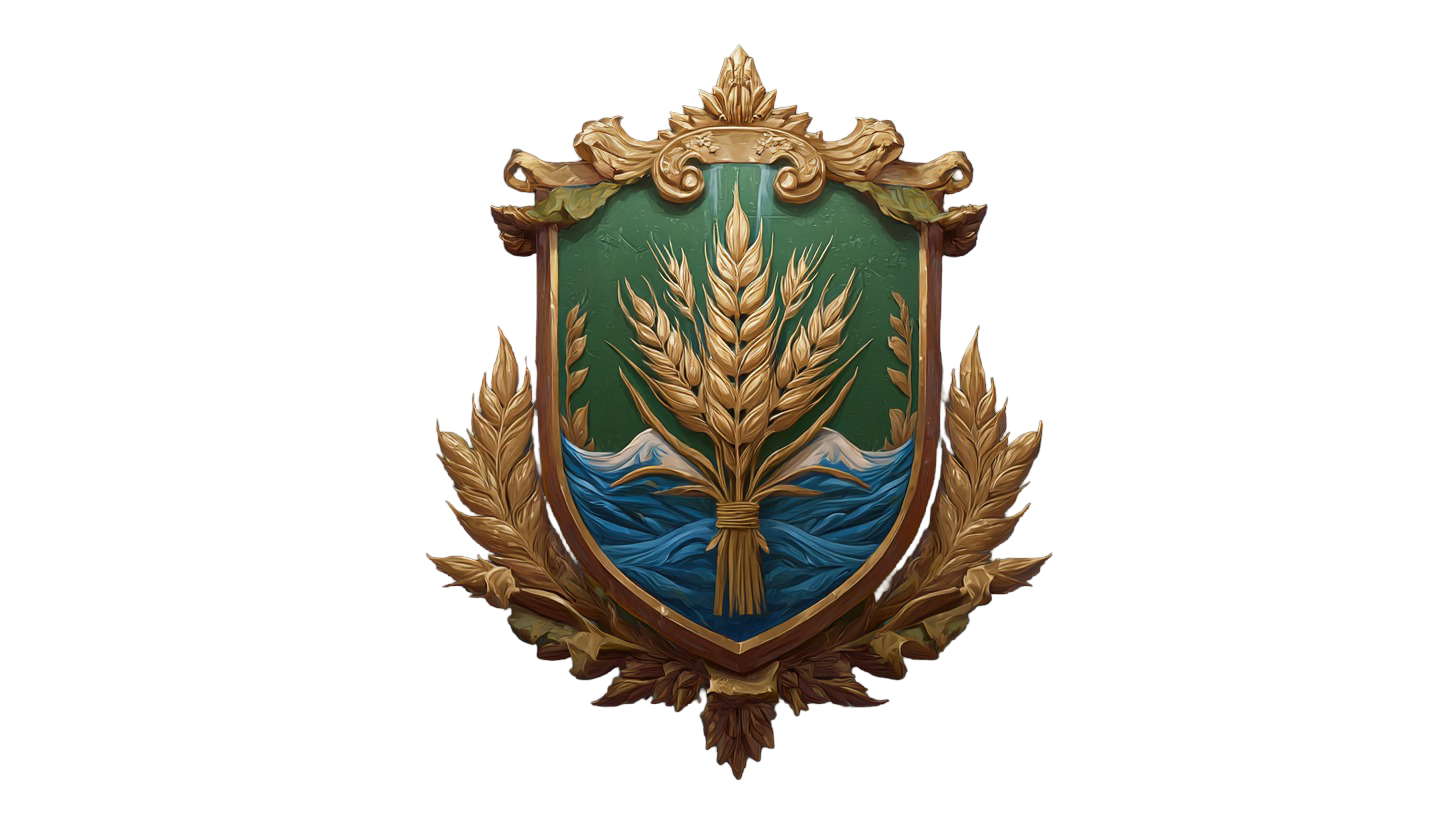
| Capital: | Wheaten |
| Ruling House: | House Tagel |
| Current Monarch: | King Halric Tagel |
| Political Role: | Primary agricultural and food-supply power of Averon |
| Geography: | Fertile plains, marshland, river deltas, managed farmland |
| Major Locations: | Wheaten, Rivermarch, Eastport, Addema Port |
| Key Sites: | Barrowfield Manor, Old Copley Court, Addema Lock |
| Religion: | Practical observance, tied to harvest and survival, Thyren of the Sheaf |
| Culture: | Provision-based authority, logistical pragmatism |
| Law: | Granary priority, river accounting, market regulation |
| Reputation: | Quietly powerful, indispensable, feared during shortages |
Oathmoot Week — an early-spring week when lords renew key oaths publicly, disputes are “paused,” and the Concord records fresh seals for the year.Sundering Night — a late-autumn vigil marking the fracture of the Old Kingdom; fires burn in silence, and saying the wrong name can start fights.Waymark Fair — rotating market-festival hosted near major crossings where the Charterhouse sells new passage writs and merchants gamble on next season’s routes.Northern Reaches Events:The Bearing Days — formal court season where petitions are heard in open halls; nobles attend because refusing to be seen is suspicious.Starwake — a winter ceremony under the crowned-star banner honoring old royal memory; it’s polite, cold, and full of subtle political tests.The White Mantle Tourney — a prestigious tourney where victory is less about brutality and more about composure, courtesy, and “clean honor.” Any are invited to join from any kingdom. Is held once a year in early spring. Happens near Silverkeep.North Rock Events:The Steel Oath Muster — an annual mustering where captains swear fresh oaths before weapons and witnesses; promotions and demotions happen openly under the ruler of North Rock.Border Hunt — a harsh late-summer campaign-season “hunt” that’s really patrol warfare (bandits, raiders, rival scouts) dressed up as tradition.The Ash-Drum Games — brutal competitive trials (archery, endurance, riding, shieldwork) used to rank companies before winter. Many noble houses across North rock take part during the spring every year. Happens in Marchspire.The Grand Tourney — A North Rock–only royal tourney held beneath Marchspire Castle in Marchspire every Autumn, restricted to Verasir vassals and sworn houses, where jousting and martial contests serve as a public measure of dominance, hierarchy, and internal rivalry rather than entertainment for foreign courts.Western Bank Events:The Ledger Opening — the public “start” of the fiscal year when toll schedules, tariffs, and legal calendars are posted to every kingdom; riots aren’t rare.Charter Court Season — a formal season of hearings where disputes are fought with precedent, witnesses, and procedural traps instead of blades.
The Ink & Silver Masque — elite festival in Ledgerfall where alliances are made behind smiles, and one signature can ruin a house.High Lands Events:The Acclamation Procession — a massive public procession reaffirming House Aerien rule in the capital of High Lands; attendance is “voluntary” the way a blade is “optional.”Ascent Day — a restricted holy-political day tied to Griffins; pilgrims are banned, and arrests are common “for safety.”The Black-Gold Lists — a martial showcase where the Crownsguard publicly names commendations and punishments to set an example.Fieldmarch Events:The Great Tally — harvest accounting season when granaries are measured, reserves assigned, and the Court of Grain effectively decides the year’s politics.Riverlock Festival — a river-port festival celebrating the river gods/goddesses they worship in Fieldmarch.The Winter Reckoning — a public evaluation of lords and stewards after winter in front of House Tagel.
The Moot of Talonsgate:
A permanent diplomatic forum held at Talonsgate every two years where envoys, ransom-brokers, and border stewards negotiate truces, prisoner exchanges, trade protections, and road-rights under strict “steel-peace” rules that forbid armed dispute within the walls.The Waymark Charterhouse:
A neutral civic authority of engineers, roadwardens, and bridge-keepers who maintain Averon’s major crossings (especially Broken Oaths Bridge and key river fords) and sell “safe passage writs” recognized in all five kingdoms, making them indispensable to merchants and marching armies alike. Is normally held Brackenholt Hall every five years.
Reachborn (Northern Reaches)Rockmen (North Rock)Highlanders (High Lands)Bankmen (Western Bank)Fieldmarchers (Fieldmarch)Crownfolk (The Crownless Isles)Gyrothian (The Ancient Empire of Gyrok)Vharosi (Vharkos)
Averic Common: The modern, living language of Averon, spoken across all five kingdoms in daily life, trade, warfare, and governance, with regional accents and slang but full mutual intelligibility; all commoners, soldiers, merchants, and most nobles speak Averic Common as their first language.High Averic (also called the Old Tongue): The ceremonial and historical language of the Old Kingdom, no longer spoken conversationally but preserved in royal inscriptions, ancient charters, coronation rites, sealed oaths, and Concord records, carrying immense symbolic authority where its use implies legitimacy, antiquity, and lawful continuity.Draconic (also called the Tongue of Flames): The ancient language spoken by dragons and the rulers of the Empire of Gyrok, believed to be older than High Averic. Draconic is a harsh, resonant language formed of deep consonants and elongated vowel sounds said to mimic the breathing patterns of dragons themselves. Surviving fragments appear in ancient runes, dragon-bound inscriptions, relics of House Helyrion, and the hidden records of the Veyrakar. Only a handful of individuals in Averon are believed capable of reading or speaking even fragments of Draconic in the present age.
Most commoners in Averon understand the world through weather, harvests, roads, and fear, not crowns or borders; few ever see a capital or meet a ruling lord, and most live and die within the same region. Power is measured locally, with garrison captains and tax collectors mattering far more than distant kings, and noble houses are known only when they bring soldiers, tolls, or famine.• Justice is expected to be uneven, swift for the poor and negotiable for the powerful, and trials are widely believed to be performances rather than truth. Faith is practiced quietly and privately, especially where the Old Faith is condemned, with shrines hidden in homes, fields, or riverbanks.• War is feared rather than celebrated, as it brings conscription, scarcity, and unsafe roads, while long-distance travel is rare and dangerous enough that crossing multiple kingdoms is considered extraordinary.• Griffins are spoken of in whispers or disbelief, magic is publicly dismissed but privately suspected, and most common folk believe that the world is older, harsher, and far less just than those in power admit. That is why many either fear or respect House Aerien for being able to control Griffins.• Most people think dragons are myth or blasphemous fable.
Barley Bread – Dense, dark loaves baked daily; eaten with everything from stews to cheese.
Pottage – A thick stew of grains, roots, and whatever meat or vegetables are available; the backbone of common diets.
Salted River Fish – Especially carp or silverfin, dried or packed in salt for travel and winter stores.
Roast Turnips & Onions – Cheap, filling, and often cooked in hearth ash or fat.
Hard Cheese – Sharp, aged wheels meant to last through travel and winter, common in every region.
Meat Pasties – Pastry sealed around minced meat and vegetables, popular with soldiers and travelers.Small Ale – Weak, cloudy ale drunk daily instead of water; safe even for children.
Dark Beer – Stronger, bitter brews favored in colder regions and garrisons.
Spiced Cider – Apple-based, lightly fermented, especially common near harvest seasons.
Mead – Honeyed and celebratory, often reserved for feasts, weddings, and festivals.
Herbal Infusions – Non-alcoholic brews made from roots and leaves, common where ale is scarce.
Across Averon, questioning the legitimacy of a ruling house, openly praising the Old Kingdom, or suggesting the Concord alters records are considered dangerous subjects, often provoking silence or swift punishment. Insults commonly target lineage, honor, faith, and competence rather than personal behavior, as identity and reputation are inseparable from survival.Northern Reaches: Calling someone “oath-thin,” “unbearing,” or accusing a house of forgetting its vows is a grave insult, while mocking the Old Kingdom or the Rite of Bearing is taboo.
North Rock: Insults focus on weakness, such as “soft-handed,” “wall-hiding,” or “unblooded,” and questioning a leader’s military competence is deeply offensive.
Western Bank: Calling someone “unrecorded,” “ledgerless,” or “procedurally false” is a serious slight, and openly criticizing the Concord or written law is taboo.
High Lands: Suggesting a ruler lacks Aerien favor, griffin legitimacy, or public acclamation is treasonous speech, and calling someone “low-sighted” or “ground-bound” is insulting.
Fieldmarch: Accusations of hoarding, waste, or mismanaged harvests are among the harshest insults, and speaking lightly of famine or price manipulation is socially forbidden.
The Concord is a continent-spanning monastic order based primarily at the Pale Monastery in Western Bank, responsible for the preservation, verification, and interpretation of all official records in Averon, including births, deaths, marriages, oaths, land charters, and succession claims. Though outwardly neutral and ascetic, the Concord wields immense quiet power, as nothing is considered legally true unless it is sealed, copied, and recognized by their scribes, making them the ultimate arbiters of legitimacy across all five kingdoms.• The Concord claims independence from all noble houses, yet its records determine which houses rise, fall, or vanish from history entirely, and many believe its archives contain omissions and alterations dating back to the Sundering of Crowns itself.
• Passage to the Pale Monastery is hard to get to due to the rocky waves surrounding the island.
The Order of the Veiled Star is a clandestine ideological brotherhood devoted to preserving the memory and legitimacy of the Old Kingdom and the High Throne, believing that Averon was never meant to be divided and that the Sundering of Crowns was an unnatural fracture of rightful rule.Though officially dismissed as relic-keepers and harmless traditionalists, the Order operates quietly across all five kingdoms, embedded within courts, garrisons, monasteries, and noble households across all of Averon.
• They do not seek power openly; they seek continuity. House Aerien deems any who are a part of this order to be traitors to their kingdom and has them to be arrested on sight.
• It is rumored that House Beorthean has ties to this order.• In the first century of the Old Kingdom, the High Throne secretly tasked the Order of the Veiled Star with eliminating the last surviving dragons that still remained across Averon after the fall of the Empire of Gyrok and its dragon-ruling dynasty House Helyrion, whose legacy threatened the legitimacy of the newly rising crown. The Order became the primary force behind systematic dragon hunts across the continent, studying the creatures and developing weapons and tactics specifically meant to kill them.
• Within roughly one hundred years of the Old Kingdom’s founding, dragons had vanished completely from the known world, and the Order helped reinforce the belief that dragons had been nothing more than dangerous beasts or exaggerated myths, ensuring the connection between dragons and the lost empire of Gyrok faded from public memory.
• Unknown to them, however, the once proud Order turned secretive cult known as the Veyrakar had hidden several dragon eggs deep within their sanctum during the fall of Gyrok, allowing the last dragons in the world to survive far beyond the reach of the dragon hunters.
• The current Grandmaster of the Order is Lord Calstar Alcrest.
The elite royal guard of North Rock, sworn directly to House Verasir and stationed primarily within Ironwatch and the Marchspire forts, serving as both enforcers of Verasir rule and the final authority in matters of internal order.• They matter because their loyalty is absolute and unquestioned, feared even among North Rock nobility, and their presence signals that mercy is no longer an option.
• The Ironward are not diplomats or peacekeepers; they exist to end conflict swiftly and decisively before it spreads.
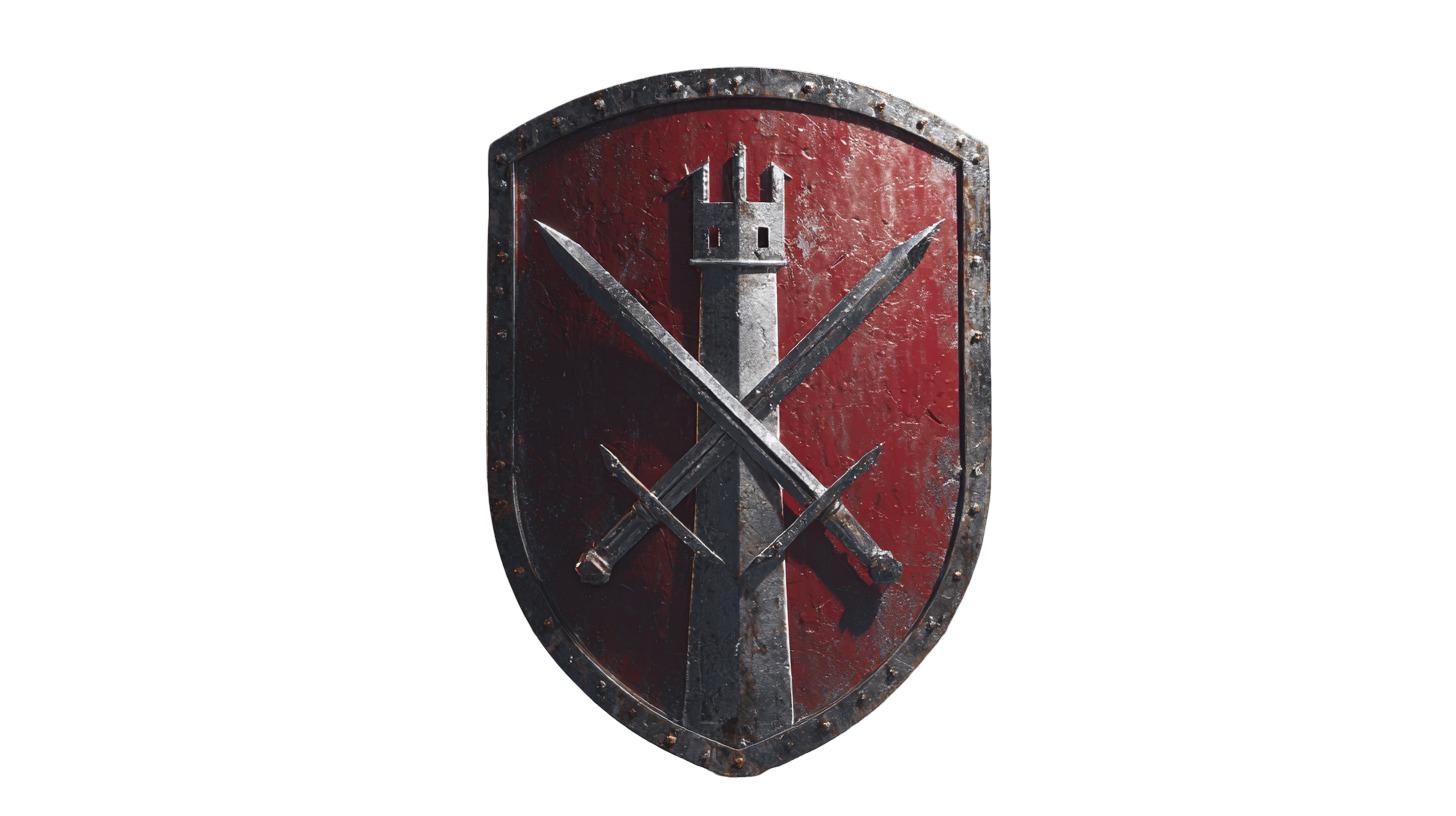
• Their uniform colors are blackened steel and deep red, often worn scarred rather than polished, and they are widely regarded as one of the most ruthless and disciplined royal forces in Averon.
The sworn knightly order of Fieldmarch, bound to House Tagel and charged with protecting the fields, granaries, river routes, and supply chains that keep the realm fed, serving less as champions of war and more as enforcers of stability and order.• They matter because in Fieldmarch food is power, and whoever controls the harvest controls the kingdom; the Fieldsguard ensures that shortages, unrest, and defiance are ended quietly before they spread.
• Their uniform colors are blue and green with muted field-gold accents, favoring practical armor over ceremony, and they are widely regarded across Averon as dependable, unglamorous, and quietly feared.
The elite royal guard of the Northern Reaches, sworn beneath Old Kingdom rites and bound directly to the Beorthean crown, serving as the personal protectors of the High Throne (even when it was believed to have long since fallen across Averon) and the final enforcers of ancient northern law within Kingsreach.• They matter because the Winterbound do not swear loyalty to a reigning monarch, but to the endurance of the crown itself; their oaths are believed to predate the Sundering of Crowns.
• Members of the Winterbound are oathbound for life and forbidden from holding lands, titles, or heirs while in service. To oppose a Winterbound is to defy tradition older than any living house.
• Their uniform colors are deep northern blue and muted gold; their armor is severe and unadorned, marked only by a restrained Beorthean sigil or winter-bound star.
The Court of Grain is a powerful economic council based entirely in Fieldmarch, operating from the fertile southeastern plains where the greatest grain reserves, granaries, and river locks of Averon are concentrated. Though it holds no crown and claims no kingdom beyond Fieldmarch, its decisions determine food distribution across all five realms, giving it quiet authority over survival, stability, and war.• Fieldmarch is its heart; the rest of Averon is its dependency.
• West Bank negotiates constantly to avoid embargo
• High Lands stockpiles heavily to reduce dependence
• North Rock guards supply routes as strategic assets
• Northern Reaches remembers famine during the Sundering and mistrusts the Court deeply
It is a forbidden cult rumored about across some of Averon, feared for its rejection of all recorded history, lineage, and lawful rule. They are hunted in every kingdom, not for conquest, but for what they seek to unmake.• The Ashen Continuum believes the world once belonged to the ancient Empire of Gyrok, a civilization older than the Old Kingdom where the rulers of House Helyrion sat upon the Dragon Throne and governed beside living dragons. To them, dragons were never beasts of war but the true sovereign powers of the sky, while creatures such as griffins are seen as lesser imitations that later cultures elevated out of ignorance.
• They view the Old Kingdom and the later Five Kingdoms as fragile political structures built atop the ruins of a far greater order. In their doctrine, the Sundering of Crowns was not a rebirth of freedom but the final stage of Gyrok’s erasure, when the memory of the dragon empire was deliberately buried by the new rulers of Averon.
• The Continuum believes that the destruction of House Helyrion severed the ancient bond between dragons and mankind. Because of this, they see the noble houses, historical archives, and bloodline records of the Five Kingdoms as tools used to bury the truth of the dragon dynasty, making institutions such as the Concord and the established noble houses their natural enemies.
• Rather than seeking open conquest, the Ashen Continuum works through disruption and decay. They believe that weakening kingdoms through famine, fractured alliances, and collapsing legitimacy will eventually expose the lies written into Averon’s history and allow the forgotten truths of Gyrok to rise again.
• Among common folk, the Ashen Continuum is often dismissed as little more than a frightening rumor or cautionary tale told to children. In taverns and village hearths they are spoken of like the boogeymen of Averon—shadowy conspirators blamed for disasters, assassinations, and mysterious collapses of power, whether they were involved or not.
The Keepers of the Quiet Faith follow the Old Faith, a belief system that predates the rise of the Old Kingdom and was practiced across Averon before crowns, borders, or dynasties divided the land. They hold that the world was once governed not by kings or conquest, but by balance, continuity, and restraint, and that the fracturing of Averon into realms was merely the latest expression of humanity’s failure to accept limits. They do not reject the Old Kingdom outright, but see it as a temporary order layered atop an older truth, one that existed before the High Throne and will endure after all crowns have fallen.• The Old Faith also spoke of dragons being the true beings of power, not griffins. And that is considered heresy to most believers of the Ascendant Creed.The following Great Houses formally condemn the Old Faith:
• House Aerien denounces the Old Faith as a threat to divine and dynastic authority, arguing that a realm without sanctioned belief cannot be ruled, and quietly authorizes suppression where Quiet Faith influence undermines loyalty to the High Lands.
• House Skant labels the Old Faith subversive, claiming its rejection of written law and sanctioned legitimacy erodes the foundations of governance, and has used Concord-recognized decrees to outlaw its rites in West Bank cities.
• House Verasir considers the Old Faith dangerous weakness, branding its adherents as defeatists who undermine military unity, and permits forced conversion or expulsion in North Rock frontier territories.
• Public shrines are illegal in those three kingdoms; private observance persists in villages and borderlands.
• Under their rule, public practice of the Old Faith is punishable by exile, imprisonment, or worse.
• However, House Beorthean and Tagel do not condemn this faith and are more open to many faiths.
The Black Ledger is an illicit, continent-spanning network of informants, brokers, and silent accountants who traffic in secrets, debts, and reputations, operating beneath the official structures of Averon. Unlike the Concord, which records what is permitted to be remembered, the Black Ledger preserves what must never be acknowledged — bribes, betrayals, bastards, false oaths, hidden murders, and altered histories. If the Concord governs legitimacy, the Black Ledger governs leverage.• Members are known as Keepers, though most use false names and never meet face to face. Beneath them are Collectors, who gather secrets from courts, taverns, ports, monasteries, and battlefields, and Binders, who verify information before it is committed to the Ledger.
• The Ledger itself is not a single book, but a distributed system of encoded records, often hidden inside legitimate account books, shipping manifests, or Concord-adjacent documents.
• The Concord officially denies the Black Ledger’s existence, though many suspect certain records align too conveniently.
• House Skant hunts the Ledger relentlessly, seeing it as a rival to legal authority, yet is rumored to have used it during the Sundering.
• House Aerien considers the Ledger a threat to symbolic power and orders quiet purges when its agents are uncovered.
• House Verasir tolerates it so long as it serves military ends, eliminating rivals before battles are fought.
• House Tagel quietly engages with it to protect trade routes and ports.
• House Beorthean is believed to be deeply entangled with it, as many of their secrets date back to the fall of the High Throne.
• Rumored to operate in the coastal shadowlands north of Charter’s Keep.
A loose coalition of veteran sellswords, ship-hired marines, and campaign sailors who move along the western coast between the Markandal Sea ports and inland mustering roads, fighting for coin, plunder-rights, and “wintering contracts” when kingdoms can’t pay in silver. Often align themselves with the Great Sea Houses of the Crownless Isles if the coin is good enough.
The Ascendant Creed is the dominant and publicly sanctioned religion of the High Lands, teaching that the world is ordered by hierarchy, vigilance, and elevation, and that rule is not chosen by faith alone but proven through strength, restraint, and the ability to stand above others without falling.• Griffins are revered not as gods, but as living proofs of elevation, creatures that judge worth instinctively and reject false authority, which is why House Aerien’s historical bond with them is seen as sacred validation rather than mere dominance.
• The Ascendant Creed rejects the Old Faith as dangerously egalitarian and condemns its emphasis on balance over hierarchy, arguing that balance without structure invites collapse.
• Though most influential in the High Lands, the Creed maintains sanctioned temples in major cities across Averon, often near seats of power, where it functions as both religion and ideological reinforcement of lawful rule.
Thyren is not prayed to for victory or miracles, but for continuance. He represents the belief that survival is earned through preparation, restraint, and respect for cycles. Fieldmarch culture holds that Thyren does not reward passion or ambition—only diligence. Famine, in this belief, is not a punishment but a consequence.• Breaking one’s word is believed to “loosen the knot” of the sheaf, inviting rot.
• Marriages blessed in Thyren’s name are expected in Fieldmarch.
(Recognized in all Five Kingdoms Crownless Isles is exempt from this)The Law of Sealed Word
Any oath, treaty, or contract sealed and recognized by the Concord is binding in all five kingdoms and cannot be lawfully broken without continental consequence.
The Law of Safe Passage
Envoys, heralds, Concord scribes, and Waymark wardens bearing proper marks may not be harmed, detained, or obstructed in any realm.
The Law of Truce-Blood
No blood may be shed during formally declared truces, diplomatic moots, or steel-peace gatherings recognized by the Concord.
The Law of the Common Road
Major roads, bridges, and river crossings maintained under continental charter may not be destroyed, blocked, or seized without recognized cause affecting all of Averon.
The Law of Harbor Neutrality
Ships bearing neutral or Concord-sanctioned colors are protected from seizure or attack within recognized ports across all kingdoms.
The Law of the Pale Record
Records preserved and certified by the Concord supersede all other archives in matters of lineage, land, oath, and legitimacy.
The Law of Non-Ascent
No individual may lawfully claim sovereignty over all of Averon without unanimous recognition from the five kingdoms and Concord confirmation.
The Law of Hostage Honor
Highborn hostages taken under treaty or truce must be kept alive, unharmed, and properly housed until lawfully exchanged or released.
The Law of Faith Restraint
No kingdom may enforce religious conversion or persecution beyond its own borders under continental law.
The Law of Necessity
During famine, plague, or mass displacement, actions taken to preserve life may temporarily supersede borders, tolls, and local authority under Concord oversight.
Northern Reaches Laws:The Law of Bearing
A ruler or lord who governs cruelly, falsely, or dishonorably forfeits their right to rule, regardless of blood.
The Law of Open Grievance
Any free subject may petition their lord directly during sanctioned court days without punishment or reprisal.
The Law of Oath Memory
Oaths sworn before witnesses bind not only the speaker but their heirs unless formally released.
The Law of Cold Mercy
Justice must be firm but restrained, forbidding torture, mutilation, or punishment born of passion rather than judgment.
The Law of Proven Blood
Claims of inheritance require both lineage and public acknowledgment by peers, not secrecy or coercion.North Rock Laws:The Law of Held Ground
Any lord who cannot defend their territory may be lawfully replaced by one who can.
The Law of Steel Oath
No ruler, captain, or commander holds authority until sworn before arms and witnesses.
The Law of Military Priority
Defense of borders and supply routes overrides all civil disputes during threat or war.
The Law of Trial by Command
Leadership disputes may be settled by sanctioned martial demonstration rather than courts.
The Law of Frontier Justice
Crimes committed in border zones are judged swiftly and without appeal to preserve order.Western Bank Laws:The Law of Written Truth
No claim, inheritance, or right exists unless recorded and recognized by lawful authority.
The Law of Precedent
Past rulings hold equal weight to present judgment unless formally overturned.
The Law of Sealed Objection
Any claim may be lawfully delayed or challenged if a procedural fault is identified.
The Law of Ledger Authority
Taxation, tolls, and obligations are enforceable only as recorded and archived.High Lands Laws:The Law of Acclamation
Rule is not recognized until publicly affirmed within the capital.
The Law of Crown Protection
Any threat to House Aerien authority is treated as treason against the realm itself.
The Law of Sacred Ascent
Certain high places are reserved for ruling rites and may not be entered unlawfully.
The Law of Exemplary Punishment
Justice must be visible, decisive, and symbolic to maintain order.Fieldmarch Laws:The Law of Sustained Plenty
No ruler or lord may hold authority if their lands cannot reliably feed their people.
The Law of Granary Priority
Grain reserves take precedence over trade, luxury, and military expenditure.
The Law of River Accounting
All river traffic must be logged, taxed, and regulated to prevent scarcity.
The Law of Market Fairness
Hoarding, price manipulation, and artificial famine are crimes against the realm.
The Law of Winter Reckoning
Each year’s survival is judged by preparation rather than intent.
The Law of the First Harbors
The Sea Houses hold authority over the Isles. Any captain who sails from those harbors owes respect and oath to the house that keeps them.The Law of Fleet Command
In times of war or major raid, captains must answer the call of the Sea Houses whose waters they sail, forming fleets under their banners until the campaign ends.The Law of Harbor Right
Any ship entering a harbor under truce may not be attacked, seized, or betrayed until it leaves those waters. Breaking harbor peace marks a captain as outlaw to every island.The Law of the Blood Tide
A lord who cannot hold their island or command its fleets may be replaced by one who can. Strength and loyalty maintain rule where charters do not.The Law of Shared Plunder
Spoils taken in raid or battle must be divided among the crews according to the agreed shares of the fleet. A lord who cheats their sailors will soon lose them.The Law of the Open Sea
Beyond the sight of harbor towers, every captain rules their own deck. No house commands a ship at sea unless the captain has sworn it.
High Scribe Aurel Voskan
Supreme preserver of records within the Concord; his seals can legitimize or erase a lineage, and his name is spoken cautiously even by kings.Marshal Edrick Blackmantle
Lord-Commander of the Crownsguard; publicly loyal to House Aerien, privately rumored to believe in continental unity.Mistress Saelene Quill
An infamous Black Ledger Binder known only by reputation; said to have ruined three noble houses without ever being seen.Waywarden Corin Holt
Senior Warden of the Waymark Charterhouse; controls passage writs for the Crownroad and Broken Oaths Bridge.Lord-Preceptor Malveron Berien
A severe religious authority of the Ascendant Creed; openly shapes doctrine to reinforce Aerien rule.Lady Ysara Thorne
Matriarch of House Thorne; feared for her ideological devotion to Old Kingdom customs.Archivist Halden Rhygan
A controversial old Reachborn scholar obsessed with pre-Sundering texts.Warlord Brask Halvorn
A legendary cavalry commander; credited with ending two border rebellions through shock assault alone.Captain Renna Kestrelmarch
A rare woman to command frontier troops; respected even by Verasir hardliners.Master Jurist Pell Dane
The most feared legal mind in Charterfall; known for collapsing claims using forgotten precedents.Ledger-Warden Isolt Grey
Overseer of toll charters along the Nevarran Way; accused of knowing “too much” about missing coin.Grain-Lord Merrek Barrowfield
Senior voice within the Court of Grain; blamed whenever famine threatens, whether responsible or not.River-Mistress Anya Addema
Controls river locks near Addema Port.The Quiet Father (alias)
A wandering preacher of the Old Faith; never seen twice in the same place, increasingly mythologized.Ash-Speaker
Known as the leader of the Ashen Continuum; known for burning records before massacres.
In Averon, time is measured according to the Sundering of Crowns, with years marked as BSC (Before the Sundering of Crowns) or ASC (After the Sundering of Crowns), and the moment of division itself referred to not as a numbered year but as the Year of Sundering. The calendar follows a standard twelve-month, three-hundred-sixty-five-day cycle, yet the months are not named; instead, they are carefully counted, often called moons in formal records kept by maesters, stewards, and royal chroniclers.• Among common folk, however, time is understood less through numbers and more through the rhythm of the seasons — the deep stillness of winter, the uncertain thaw, the long campaigning days of summer, and the slow decline into autumn’s harvest.
• While official documents may record precise days and moons, daily life remembers events more loosely, with births recalled as occurring “late in the winter cold” and wars remembered as beginning “before the harvest,” anchoring memory to survival rather than the page.
Across Averon, coinage exists in many regional forms, but trade only functions because everyone agrees on weight, metal, and seal, not face value. Merchants count coins by sound and cut before they count by name.Continental Standard:
(Recognized Everywhere)Despite regional minting, most trade ultimately converts to a shared standard known informally as Crownweight.
• Gold Crowns: High-value currency used for land sales, military contracts, noble debts, and international trade; rarely handled by commoners.
• Silver Marks: The backbone of daily commerce, wages, rents, tolls, and tariffs across all five kingdoms.
• Copper Pennings: Used for food, drink, lodging, and local market exchange among common folk.
• Foreign or old coins are accepted only by weight, and shaved or clipped coinage is a criminal offense in all kingdoms.Kingdom Variations:• Northern Reaches favor older, heavier silver marks stamped with legacy seals from the Old Kingdom; purity matters more than portrait.
• North Rock issues thick, blunt-cut coins meant to survive frontier handling, often marked only with steel stamps rather than faces.
• Western Bank produces the most paperwork-heavy currency, with serial-sealed coin batches recorded by clerks and auditors.
• High Lands circulate ceremonial gold and stamped silver tied to House Aerien authority; counterfeit Aerien coinage is treated as treason.
• Fieldmarch uses grain-backed silver notes for bulk trade, convertible at granaries and river ports, especially during harvest seasons.
• Crownless Isles rely less on formal minting than mainland kingdoms of Averon, favoring trade-weight silver, foreign coin, and cut bullion carried easily aboard ships. Coinage from many ports circulates freely so long as the metal holds true.Trade Foundations of Averon:Trade in Averon moves along three arteries: grain, roads, and rivers.
• Fieldmarch controls food, making grain contracts more powerful than gold during lean years.
• Western Bank controls charters, tolls, and ledgers, deciding who may trade legally.
• North Rock controls overland security, determining which routes are safe enough to exist.
• High Lands control prestige goods, weapons, trained guards, and symbolic authority.
• Northern Reaches control legitimacy of old measures, especially in noble exchanges and treaties.
• Barter still exists in rural regions, but anything beyond village scale inevitably converts into coin, ledger, or oath.Trade Enforcement & Disputes:• Trade contracts are usually witnessed by local stewards, but high-value agreements are sealed through the Concord.
• Disputed weights, false measures, or forged marks are crimes everywhere, though punishments vary.
• Smuggling is common along coasts and borders, but interfering with grain shipments is universally despised.
Gyrok was an ancient empire that existed on the continent of Averon long before the rise of the Old Kingdom, so distant in time that almost no surviving records of it remain in modern knowledge.• Gyrok was governed from the Dragon Throne, the supreme seat of imperial authority. The throne was held exclusively by the ruling dynasty known as House Helyrion, whose bloodline was believed to carry traces of dragon blood.
• Members of House Helyrion were known across the old world as the Dragon Sovereigns. Unlike later legends that imagined dragons as enslaved beasts of war, the rulers of Gyrok were said to command dragons through lineage rather than force. Dragons did not submit through chains or coercion but instead recognized the authority of Helyrion rulers naturally, bowing to those who carried the ancient blood.
• Beneath the Dragon Throne the empire was organized into a strict hierarchy of noble houses, military governors, and imperial institutions that maintained order across its territories. Among these institutions were specialized orders tasked with protecting the stability of the empire and safeguarding its dragon lore.
• The power of Gyrok rested not only in armies and governance but in the belief that those who possessed dragon blood were destined to rule mankind. This doctrine shaped the empire’s culture, politics, and identity for generations.
• When the Empire of Gyrok eventually collapsed, rival factions and rising powers feared the return of the dragon dynasty. In the chaos that followed, House Helyrion became the target of widespread purges intended to destroy the bloodline that had once ruled the empire.
• Many members of the Helyrion family were killed or persecuted by traitors that would later begin the start of the Old Kingdom, while others fled across Averon to the distant lands of Vharkos under false identities to escape extinction. Over generations the bloodline fragmented and its name disappeared from recorded history, leaving only scattered myths about ancient dragon-riding rulers.
• The rise of the Old Kingdom further erased the memory of Gyrok and House Helyrion. Scholars and priests of the new age reshaped historical records, dismissing dragons as creatures of legend and reducing the once-dominant dragon empire to little more than fading folklore.
• The secret order once tied to Gyrok survived in hiding and later became known across Averon as the Ashen Continuum. Members of the order secretly preserve the true name of their ancient legacy — the Veyrakar. They allow the world to believe they are merely a cult until the day comes for dragons to rule again.
• To the Veyrakar, the kingdoms of modern Averon are false layers built atop the forgotten truth of Gyrok, and history itself must eventually be turned back toward its original order.
• A Great Seer was an extraordinarily rare individual recognized in the time of the Empire of Gyrok, believed to possess a mind capable of perceiving fragments of fate, memory, and hidden truth beyond the limits of ordinary sight. Unlike priests or mystics, Great Seers were said to experience visions that emerged without ritual or prayer—flashes of the past, distant events unfolding elsewhere, or possible futures not yet fixed. In Gyrothian belief, such individuals were thought to exist outside the normal flow of time, their minds touching the deeper patterns of the world itself. Because their visions could influence imperial decisions, Great Seers were both revered and feared, often kept close to the Dragon Throne where their insight could guide the rulers of House Helyrion.
The Sundering of Crowns was essentially a dynastic collapse that happened over 1000 years ago. It was a continent-wide civil war that erupted after the death of the last universally recognized High King, whose heirs all possessed competing claims to the throne — blood, marriage, decree, and conquest. For a brief, bloody span of many decades, five crowns were declared at once. It ended in the permanent end of a unified continent, the rise of sovereign kingdoms instead of one kingdom that ruled the entire continent, the rewriting of succession law everywhere, and the elevation of several Noble Houses who betrayed correctly or incorrectly.• The last High King on the High Throne was Roderin IV. He died of old age and was universally loved by the people, except for his scheming heirs.
• The High Throne is an honor and privilege that not many are able to see, even if it means little in present-day Averon. It now rests in the capital of the Northern Reaches.
• The Five Great Houses of Averon still scheme against one another, hoping for another chance to become rulers of the entire continent one day.
The Old Kingdom was the first unified realm of Averon, ruled by a single High King whose authority bound all lands, laws, and noble houses beneath one crown, creating centuries of order, shared culture, and centralized power. It ended in the Sundering of Crowns, when succession fractured, rival kings rose, and the realm shattered into the Five Kingdoms of Averon that now rule in its place.• High King Roderin IV was the last High King of the Old Kingdom, ruling during its final decades as authority fractured and frontier systems were abandoned rather than lost outright.
• Roderin IV was known for ruling almost entirely by precedent, refusing to introduce major reforms and instead attempting to preserve ancestral law, believing continuity was the only way the realm might survive its decline.
• An Old Kingdom proverb holds that “the throne remembers who rose from it,” used to imply that a ruler’s legacy followed them beyond death, shaping how later generations judged their reign.
• During the time of the Old Kingdom, years were often named after major events rather than numbered, resulting in overlapping calendars that modern historians still struggle to reconcile.
• High King Aerthyn “the Talon-Crowned” is remembered in Old Kingdom songs as a brutal and unstable ruler whose obsession with griffins became a tool of terror rather than symbol. He kept chained griffins within royal grounds and is said to have ordered executions—often of his own kin—during staged “judgments,” declaring those who failed to face the beasts without fear unworthy of blood or crown. His reign was marked by widespread kinslaying, purges of rival lines, and the collapse of internal trust, and later chronicles name his rule as the beginning of the Old Kingdom’s descent into paranoia, fracture, and moral rot.
• The Old Kingdom was said to have lasted a very long time before the Sundering of Crowns happened. No one, not even scholars, knows how long it reigned.
• Technically, all Five Great Houses of Averon in the present day have blood ties to the High Throne. At some point in history, there sat an ancestor upon the High Throne whose bloodline now flows into these modern houses.
• The Binding of Hands (Old Kingdom Marriage Rite): Marriage in the Old Kingdom is not a celebration of love, but a public declaration of endurance to the Old Gods. The couple stand before bare stone while their right hands are bound together with a strip of woven wool and iron thread, symbolizing shared labor and shared burden. A union formed this way is believed to bind not only the couple, but their bloodlines, lands, and future heirs until death or formal dissolution before witnesses.
The Wall was constructed during the era of the Old Kingdom, a hundred years before the Sundering, to protect the kingdom's capital from the rest of the continent. At the time, the lands beyond the High Mountains were unstable and contested, and the Wall marked the absolute limit of imperial authority rather than a border between recognized kingdoms.• Many records of The Wall had been burned when the Sundering happened.
• After the collapse of the Old Kingdom, the Wall became a political boundary by circumstance rather than design. Territories south of it stabilized into the Northern Reaches, while lands beyond it hardened into North Rock, transforming a defensive structure into a lasting border and a source of enduring resentment and reverence.
A coordinated assassination carried out during a winter feast at Kingsreach in 1102 ASC in the Great Hall of the Royal Keep of the Northern Reaches, where King Cedric Beorthean, Queen Halwyn Beorthean, Prince-Regent Kodrin Beorthean, Princess-Consort Maereth Alcrest, and Lord Theron Beorthean were slain in a sudden eruption of violence masked as celebration.The attack collapsed the Beorthean royal line in a single night, leaving the Great Hall soaked in blood before guards could meaningfully respond. Responsibility was never formally claimed, evidence was fragmented or deliberately erased, and surviving witnesses gave conflicting accounts, ensuring the massacre became not only a tragedy but a political wound—one that shattered stability, accelerated Cassian Beorthean’s ascent, and ignited his campaign across Averon to make all Great Houses kneel before him as the High King.
By the close of winter in 1102 ASC, King Cassian Beorthean’s campaign had already broken the illusion that the Five Kingdoms of Averon could remain untouched by a single crown. The march into the High Lands forced House Aerien to confront a reality they had long believed tradition alone could prevent: that a claimant willing to move armies faster than precedent could speak might reshape the realm before the old order could react.• Though Cassian’s advance into the High Lands was met with resistance in the mountain passes and delays engineered by Aerien-aligned lords, the campaign achieved its deeper goal—precedent had been challenged openly.
• Western Bank responded not with armies but with obstruction. Queen-Regnant Elsveth Skant slowed the machinery of the realm through law, tolls, sealed roads, charter reviews, and procedural delay, turning every river crossing and document into a battlefield of ink. Cassian’s armies could march, but House Skant ensured that legitimacy, record, and recognition would move far more slowly.
• By the first thaw of early spring in 1103 ASC, Cassian’s march had not yet ended the old order—but it had shattered the illusion that it was unbreakable. Roads had shifted, loyalties had hardened, and every lord of Averon now understood that the question of a High Throne was no longer theoretical.
By the close of winter in 1102 ASC, quiet tensions had begun to form around Dagren Black, the long-dismissed bastard of House Vaedryn living beneath Blackenwake Hold. Though ignored by most of the Isles’ nobility, Dagren slowly built influence around Stormbreak Harbor through intimidation, deception, and careful alliances beyond the notice of his family.• During the final months of winter, Dagren established discreet connections with Captain Ruben of House Skarn and Vaelric Calderis, second son of Lord Balric Calderis of Saltcourt Port. Through Ruben he gained access to ships and hardened crews, while Vaelric quietly diverted coin and supplies through Calderis trade channels.
• By early spring of 1103 ASC, Dagren had positioned himself within the lower workings of Blackenwake Hold, gaining access to guard movements, harbor communication, and the seals used to issue household orders.
• In late spring of 1103 ASC, he set his plan into motion. False orders drew the Vaedryn family from the fortress to the docks under the pretense of an attack and evacuation.
• Over the course of a single storm-lashed night, Dagren orchestrated the systematic slaughter of the Vaedryn ruling line. By dawn, the house that had cast him aside was nearly erased, leaving the bastard of Blackenwake as the only man capable of claiming its name.
The Crownless Isles are a storm-battered archipelago in the Markandal Sea, northwest of the mainland of Averon. The islands are jagged, rocky, and difficult to farm, with sheer cliffs, black stone shores, narrow channels, and cold waters that have shaped the islanders into a people bound to the sea above all else.• The isles are not governed like the Five Kingdoms of Averon. Though mainland nobles often call them a kingdom for convenience, the Crownless Isles operate under their own insular maritime rule, with power divided among rival Sea Houses, fleet captains, and salt-blooded dynasties whose strength is measured more by ships and loyalty than by fertile land.
• Life in the Crownless Isles is harsh. Soil is thin, winters are bitter, and few islands can sustain large inland populations. Because of this, the islanders survive through fishing, shipcraft, salt-trade, whaling, raiding, and the control of sea routes. Their culture prizes seamanship, endurance, boldness, and personal reputation.
• To the people of Averon, the Crownless Isles are seen as dangerous, half-civilized sea-lords: useful when trade is needed, troublesome when they raid, and nearly impossible to fully subdue because no mainland army can hold the islands for long.
• Though often compared to raider cultures by mainlanders, the islanders do not see themselves as mere pirates. They believe the sea itself is the truest measure of worth, and that weak bloodlines, weak rulers, and weak crews are meant to be washed away.
• Often called the Kingdom of the Isles or the Crownless Kingdom by those from Averon.
The two circular 'islands' visible in the Markandal Sea are not natural land at all but the immense heads and shoulders of two colossal black-stoned dragon statues rising from the ocean. They lie east of the Crownless Isles and northwest of the northern coast of Averon, standing alone in the open waters between the mainland and the island archipelago. From a distance they appear as small rocky islets, but as ships approach their true scale becomes clear. And that is also how sailors know the Crownless Isles are ahead.• Each Sentinel is carved from ancient black sea-stone and towers higher than any fortress tower in Averon. Their bodies continue far beneath the surface where enormous iron chains descend into the abyss of the Markandal Sea, anchoring the monuments to the ocean floor.
• No surviving record from Averon or the Crownless Isles explains who built the statues or why. Island legends claim they were raised in an age long before the Old Kingdom, when dragons ruled the skies and early civilizations sought ways to bind them. Some stories insist the statues themselves act as seals placed over something ancient imprisoned beneath the sea.
• Sailors of the Crownless Isles treat the Dragonbound Sentinels with wary respect. Passing between them forms a narrow sea path used by captains traveling between the Isles and the northern coasts of Averon.
• The waters surrounding the Sentinels are extremely deep and violently unstable. Powerful currents swirl around their submerged foundations, making anchorage impossible and discouraging exploration. Though sailors and scholars have attempted to study the statues for centuries, none have ever reached the ocean floor to see where the chains truly end.
• Among the islanders the Dragonbound Sentinels are not simply ruins but warnings left by a forgotten age. The oldest sea tales claim that if the chains ever break, the Markandal Sea will remember why they were forged.
Government of the Crownless Isles is centered on a system known as the Tide Crown.• Unlike the hereditary monarchies of mainland Averon, no ruler of the Isles holds unquestioned permanent right by blood alone. Power rests first with the major Sea Houses, each of whom controls islands, ports, fleets, sworn captains, and maritime strongholds.
• When unified rule is needed, the Sea Houses and their captains gather in a great assembly called the Storm Moot. There, through bargaining, threat, acclaim, and factional pressure, one among them is raised as Tide King or Tide Queen.
• The Tide Crown is therefore not a guaranteed inheritance. A ruler's child may inherit ships, allies, and prestige, but not necessarily the Crown itself. If a ruler dies weak, rules poorly, loses fleets, or fails to command obedience, the balance of the Crownless Isles can fracture and a new contender may rise.
• This system makes the Crownless Isles politically unstable compared to Averon, but it also makes them difficult to conquer. To break one Sea House is not to break the whole archipelago, and to kill one Tide King or Tide Queen is often only to begin the next struggle.
Culture of the Crownless Isles is rooted in the sea rather than the soil. Islanders respect what is won through courage, skill, command, and survival, not merely what is inherited through parchment and bloodlines.• Seamanship is the highest common measure of worth. Children of the Crownless Isles learn tides, ropes, and rocks early, and even noble-born heirs are expected to know ships rather than simply rule from halls.
• Important islander values include loyalty between captain and crew, fearlessness in storms, contempt for softness, and the belief that reputation must be earned through visible deeds. A weak captain risks mutiny, desertion, or quiet replacement.
• Mainland customs of courtly restraint matter less in the Crownless Isles than direct strength and practical authority. A ruler who cannot hold a deck in storm, command a fleet, or inspire hard men at sea is often mocked even if they possess noble ancestry.
• Islanders are known for being blunt, proud, and deeply suspicious of mainland law. They respect bargains when made in strength, but they despise rulers who hide behind scribes, seals, and words alone.
• Many in the Crownless Isles believe the sea strips away falsehood. On land a man may pretend to greatness; on the water, the storm reveals what he truly is.
• Despite their reputation across Averon, the islanders still see themselves as noble in their own way and pride themselves on direct speech and outward honesty.
Religion in the Crownless Isles centers on an ancient maritime deity called the Deep Mother.• The Deep Mother is believed to dwell beneath the waters of the Markandal Sea, in the black pressure and silence below even the deepest anchors. Islanders believe she governs storm, current, fog, wreck, hunger, and the fate of all who make their living upon the sea.
• She is not worshiped as a gentle mother in the mainland sense. To the islanders, the Deep Mother gives fish, wind, and passage when pleased, but takes ships, sons, and kings without apology when angered. Her faith is therefore built as much on fear and reverence as devotion.
• Shrines to the Deep Mother are often cut into sea-cliffs, caves, and black stone coves. Offerings before voyages may include salt, carved driftwood, shellwork, iron hooks, pieces of rope, or a captain's blood let into the tide.
• Sailors lost in storms are often said to have been “claimed by the depths” or “taken below by the Mother.” To drown is tragic, but not shameful. To refuse the sea out of fear is considered far worse.
• Some older island tales claim the Deep Mother remembers every hull that has ever sunk and every oath ever spoken over open water.
The Great Sea Houses of the Crownless Isles dominate island politics, each controlling fleets, anchorages, captains, and hard coastal territories.• House Thalrek is one of the strongest Sea Houses in the archipelago, known for disciplined fleets, strong hull construction, and some of the deepest and safest natural harbors in the Isles. They are often seen as natural claimants for the Tide Crown and have a long history with House Beorthean.
• House Morvane rules islands choked with hidden channels and knife-thin passages. Their captains are famous for speed, ambush, and navigation through waters that would wreck mainland ships.
• House Skarn is feared across the Markandal Sea for black-sailed raiding fleets and a long tradition of taking by force what weaker powers cannot defend. They carry the old terror of the Crownless Isles more openly than the others.
• House Vaedryn claims descent from the first great captains who settled the archipelago. Their authority is old, proud, and deeply woven into island tradition, making them influential whenever questions of ancient custom or rightful rule arise.
• House Calderis is the most outward-facing of the major Sea Houses, often dealing with merchants and mainland envoys. Though less openly savage in reputation, they are no less ambitious and understand that trade can conquer what war cannot.
• Rivalries among the Sea Houses shift constantly. Alliances are often secured through marriage, fleet pacts, shared plunder, or mutual enemies, then broken just as quickly when advantage changes.
The Crownless Isles have a long and uneasy relationship with mainland Averon. At different times in history, they have been raiders, smugglers, escorts, traders, mercenaries, and naval allies depending on which Sea House held influence and which mainland kingdom offered opportunity.• House Vaedryn of Vaedryn Rock has historically maintained the closest ties to the mainland, particularly with House Beorthean of Kingsreach, whose northern fleets often relied on island navigators familiar with the dangerous waters of the Markandal Sea.
• During the later years of the Old Kingdom, Vaedryn captains occasionally served as escorts and scouts for royal fleets, guiding mainland ships through storms, reefs, and shifting channels that larger naval forces struggled to navigate.
• After the Sundering of Crowns, these arrangements became far less stable. Some Vaedryn lords continued quiet trade with northern ports while other island captains returned fully to the traditional raiding culture of the Crownless Isles.
• Early rulers of House Beorthean occasionally hired Vaedryn ships to protect northern trade routes, creating a wary partnership built more on necessity than loyalty.
• Other mainland houses have often viewed the Crownless Isles with hostility. Merchants of the Western Bank have long suffered island raids, while warlords of North Rock have launched several punitive expeditions into the archipelago.
• None of these mainland campaigns ever fully subdued the Sea Houses. The islands’ fractured geography and the islanders’ mastery of their waters have repeatedly prevented lasting conquest.
• Islanders frequently raid merchant shipping when mainland authority weakens, particularly along trade routes linking the Northern Reaches, Western Bank, and Fieldmarch.
• Among mainland nobles the Crownless Isles are viewed with a mixture of contempt, fear, and reluctant respect. Among islanders, mainland rulers of Averon are often seen as land-bound and overdependent on laws the sea does not recognize.
• Any mainland war that weakens ports, divides fleets, or disrupts coastal defenses creates opportunity for the Crownless Isles, whether through plunder, private agreements, or the rise of a Tide King or Tide Queen bold enough to force the mainland to treat the archipelago as a power rather than a nuisance.